
Lalique
Lalique, founded by René Lalique in 1888 in Paris, is a luxury brand renowned for its exquisite crystal creations. With a legacy rooted in artistry and craftsmanship, Lalique has become synonymous with elegance and sophistication, captivating collectors and enthusiasts worldwide with its timeless designs and meticulous attention to detail.
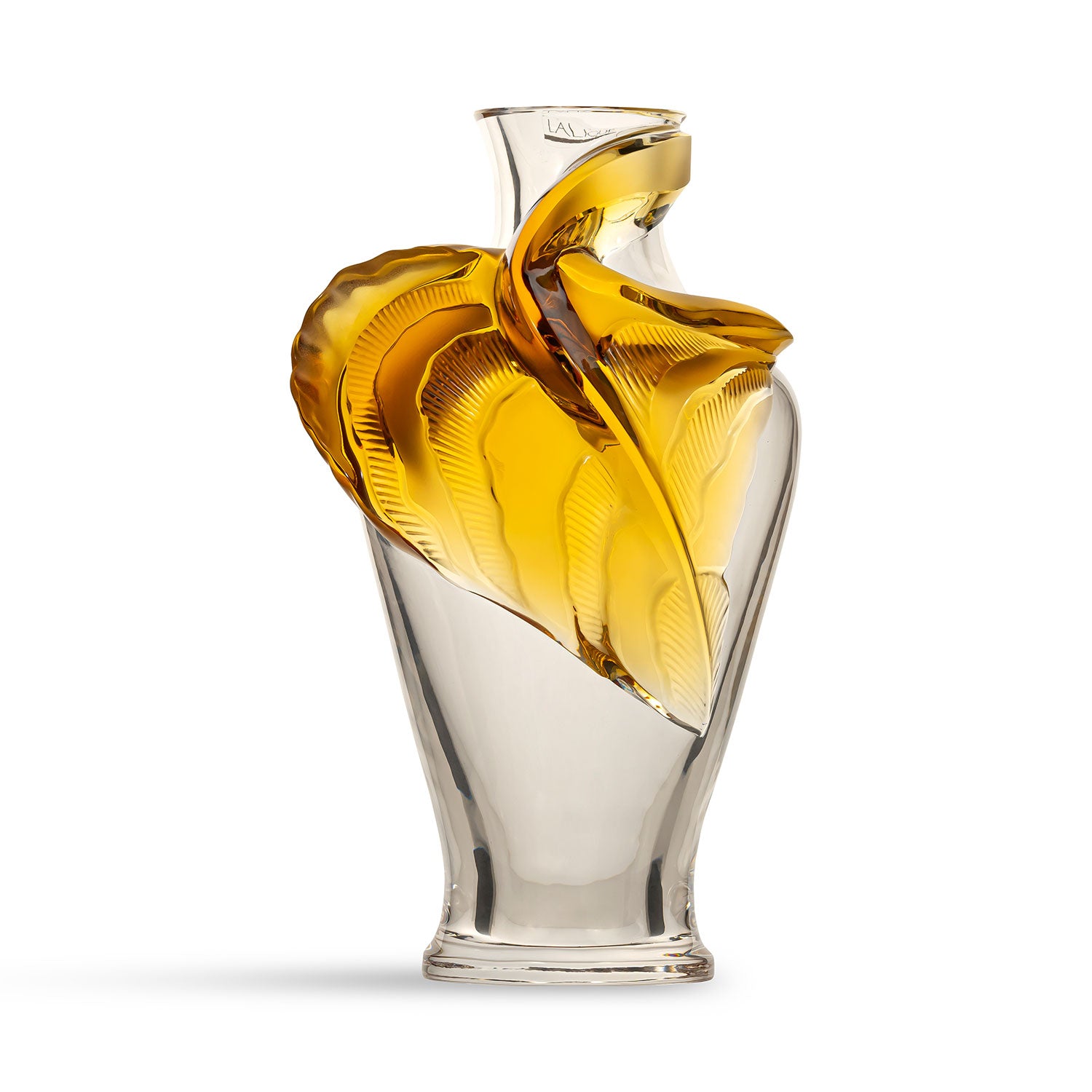
Lalique Crystal | Amber Leaf Crystal Vase | Luxury French Crystal Art | Thomas Goode India
Lalique was founded in Paris in 1888 by René Lalique, one of the most celebrated artists and designers in the history of French decorative art. René Lalique began his career as a jeweller, producing work that is now considered among the finest examples of Art Nouveau jewellery ever created: pieces characterised by their use of unconventional materials (horn, ivory, enamel, semi-precious stones), naturalistic motifs drawn from the natural world (insects, flowers, the female figure), and an integration of artistic vision and technical mastery that distinguished Lalique's work from every other jeweller of the period.
In the early 20th century, René Lalique shifted his primary focus from jewellery to glass, a transition that would produce the most significant body of decorative glass work in the French tradition since the Venetian masters. The glass pieces Lalique began producing in the 1910s and 1920s occupied entirely new territory: large-scale moulded glass objects with deeply sculpted surfaces, whose forms and motifs drew from the same naturalistic vocabulary as his jewellery. Lalique's glass panels, vases, figures, and architectural pieces combined the visual language of Art Nouveau and Art Deco with an understanding of how glass catches and refracts light that produced surfaces of unprecedented depth and beauty.
By the 1920s and 1930s, Lalique crystal was being commissioned for the most ambitious French luxury interiors of the period: the Orient Express, the Normandie ocean liner, the Côte d'Azur express, and major architectural projects across Paris. René Lalique's glass work was not merely decorative, it was architectural, structural, and light-transforming in a way that no other decorative glass tradition had achieved. His pieces and those of the Lalique house he founded are now held in the permanent collections of the major French and international museums of decorative art, and command significant prices at the world's leading auction houses.
Today, the Lalique house continues to produce crystal objects from its manufactory in Wingen-sur-Moder in Alsace, France — the same facility where it has been based since the 1920s. Every Lalique piece is produced using processes developed by René Lalique: mould-blown and pressed crystal with deeply sculpted relief surfaces, finished by hand by the Alsatian craftspeople who have worked with the Lalique methods for generations.
The Amber Leaf Crystal Vase
The Amber Leaf Crystal Vase is the single Lalique piece available at Thomas Goode India, and it represents the Lalique tradition at its most direct and materially powerful. The Amber Leaf is a large-format crystal vase whose defining design element is exactly what its name states: a dense, overlapping composition of leaf forms sculpted in deep relief across the full surface of the crystal body, rendered in Lalique's amber colourway — the warm, golden-orange glass tonal family that is one of the house's most longstanding and celebrated colour traditions.
The amber colourway in Lalique crystal is not a surface application. Like the integral colour techniques used by Klimchi and Moser, the amber colour in Lalique crystal is achieved through mineral compounds added to the glass batch — here, iron oxide and other mineral agents that produce the warm amber-gold tonal character integral to the material throughout its depth. When light passes through the amber crystal of the Amber Leaf Vase, it is transformed by the colour of the glass before it emerges: the light that reaches the eye has travelled through amber glass, and the warmth it carries is the direct result of that passage.
The leaf relief is executed with the depth and precision that defines the Lalique moulded crystal technique. Unlike cut crystal — where the decorative surface is created after forming by cutting and polishing the solid glass — Lalique's relief decoration is formed simultaneously with the glass body, through moulds whose interior surface carries the precise negative of the intended relief. The leaf forms on the Amber Leaf Vase are therefore not incised or engraved onto the surface after the fact but raised from the glass body itself during its formation, with a depth and three-dimensionality that flat surface decoration cannot achieve.
The Amber Leaf Crystal Vase is a room-defining piece. Its amber colour, its scale, and the visual complexity of its leaf-relief surface make it one of the most significant individual decorative objects available at Thomas Goode India — appropriate as a collector's acquisition, as a statement piece in a formal reception room or entrance hall, and as the most prestigious single gifting object in the collection for occasions of the highest standing.
René Lalique and the Art of Decorative Glass
René Lalique's transition from jewellery to glass in the early 20th century produced a body of work whose influence on the history of decorative art cannot be overstated. The technical innovations he introduced — large-scale moulded glass with deep sculptural relief, the combination of clear and frosted glass surfaces within a single piece, the precise control of amber and coloured glass tones became the foundational vocabulary of the Art Deco decorative glass tradition.
The scale of Lalique's commissions in the 1920s and 1930s reflects his position: he was not producing decorative objects for private collectors alone, but architectural glass for the most ambitious luxury environments of the period. The grand salon of the Normandie ocean liner the most celebrated luxury vessel of the 20th century included Lalique glass panels and lighting. The private railway carriages of the Côte d'Azur express carried Lalique glass. The interior architecture of several Parisian luxury buildings incorporated Lalique glass as structural and decorative elements simultaneously.
This architectural ambition distinguishes Lalique from every other luxury crystal house. Baccarat (founded 1764) and Saint-Louis (founded 1586) represent the French cut and blown crystal tradition — extraordinary craft in the service of tableware and domestic decorative objects. Lalique represents something different: the application of crystal as an art medium in the fullest sense, with decorative and architectural pieces conceived at the scale and ambition of major art works.
The Amber Leaf Crystal Vase at Thomas Goode India carries this heritage directly. It is not a decorated object but a designed one — the leaf forms, the amber colour, and the relationship between them are design decisions that reflect a tradition now more than a century old.
Gifting Guide
The Amber Leaf Crystal Vase is the most prestigious single gifting object available at Thomas Goode India — appropriate for occasions where a gift of unambiguous artistic standing is required: the opening of a significant institution or office, a diplomatic presentation, a personal occasion of the most significant kind, or a collector's acquisition for a formal interior that will hold the piece for decades.
Lalique crystal is universally recognised by collectors and design enthusiasts as one of the world's great decorative art traditions. A recipient who knows Lalique will understand the significance of the Amber Leaf Crystal Vase without context. A recipient who does not know it will respond to the piece's visual authority — the amber depth, the leaf relief, the scale — as an object that communicates its quality unambiguously.
To Shop Lalique Luxury Crystal Art Online in India, the Amber Leaf Crystal Vase is available at thomasgoode.in/collections/lalique, with personalised assistance from the Thomas Goode India team at The Oberoi Hotel, New Delhi.
Frequently Asked Questions
What is Lalique and who founded it?
Lalique was founded in Paris in 1888 by René Lalique, one of the most celebrated designers in French decorative art history. Beginning as a jeweller producing work now considered among the finest Art Nouveau jewellery ever made, René Lalique shifted his primary focus to glass in the early 20th century, creating a body of moulded crystal work that became the foundational vocabulary of the Art Deco decorative glass tradition. The Lalique house continues to produce crystal from its manufactory in Wingen-sur-Moder, Alsace, France. The Lalique collection at Thomas Goode India is available at The Oberoi Hotel, New Delhi and online.
What is the Lalique Amber Leaf Crystal Vase?
The Amber Leaf Crystal Vase is a large-format Lalique crystal vase with deeply sculpted leaf forms in relief across its full surface, produced in the amber crystal colourway — a warm golden-orange glass tonal family integral to the material throughout its depth. The leaf relief is formed simultaneously with the crystal body through precise moulds, giving the decoration a three-dimensional depth that surface-applied or engraved decoration cannot achieve. It is the most prestigious single decorative object available at Thomas Goode India.
What is the Lalique moulded crystal technique?
Lalique's moulded crystal technique forms the decorative relief simultaneously with the glass body, using moulds whose interior surface carries the precise negative of the intended design. Unlike cut crystal where decoration is created by cutting and polishing the formed glass after the fact Lalique's relief is raised from the glass itself during formation, with the depth and three-dimensionality of actual sculptural form. This technique was developed and refined by René Lalique in the 1910s and 1920s, and remains the defining production method of the Lalique house.
How does Lalique differ from other luxury crystal houses at Thomas Goode India?
Baccarat (founded 1764) and Saint-Louis (founded 1586) represent the French cut and blown crystal tradition — exceptional craft in the service of tableware and domestic decorative objects. Moser represents the Bohemian hand-cut crystal tradition with 24K gold. Lalique (founded 1888 by René Lalique) represents crystal as an art medium: moulded relief sculpture in glass, conceived at the scale and ambition of major art works, with architectural commissions including the Normandie ocean liner and the Côte d'Azur express in the 1920s and 1930s. The Amber Leaf Crystal Vase at Thomas Goode India places the buyer within this tradition directly.
What is Art Nouveau and Art Deco and how do they relate to Lalique?
Art Nouveau was a decorative arts movement that flourished approximately 1890–1910, characterised by flowing naturalistic forms, asymmetric compositions, and motifs drawn from the organic world like flowers, insects, the female figure. René Lalique's early jewellery is among the finest Art Nouveau work ever produced. Art Deco succeeded Art Nouveau approximately 1920–1940, with a more geometric, symmetrical, and architecturally precise aesthetic. Lalique's glass work of the 1920s and 1930s bridges both traditions: the naturalistic motifs of Art Nouveau rendered with the formal clarity and large-scale architectural ambition of Art Deco. The Amber Leaf Vase's leaf forms carry this heritage.
How should the Lalique Amber Leaf Crystal Vase be cared for?
The Amber Leaf Crystal Vase should be dusted regularly with a soft dry cloth. For cleaning, use a slightly damp cloth and dry immediately do not submerge the piece in water or use chemical cleaning agents on the crystal surface. The relief surface should be cleaned with a soft brush to remove dust from the recessed areas. Store on a stable, cushioned surface away from the edges of shelves or tables. Handle by the body rather than by the rim or any projecting relief element. Keep away from prolonged direct sunlight, which can affect the surface character of coloured crystal over extended periods.
Lalique Crystal | Amber Leaf Crystal Vase | Luxury French Crystal Art | Thomas Goode India
Lalique was founded in Paris in 1888 by René Lalique, one of the most celebrated artists and designers in the history of French decorative art. René Lalique began his career as a jeweller, producing work that is now considered among the finest examples of Art Nouveau jewellery ever created: pieces characterised by their use of unconventional materials (horn, ivory, enamel, semi-precious stones), naturalistic motifs drawn from the natural world (insects, flowers, the female figure), and an integration of artistic vision and technical mastery that distinguished Lalique's work from every other jeweller of the period.
In the early 20th century, René Lalique shifted his primary focus from jewellery to glass, a transition that would produce the most significant body of decorative glass work in the French tradition since the Venetian masters. The glass pieces Lalique began producing in the 1910s and 1920s occupied entirely new territory: large-scale moulded glass objects with deeply sculpted surfaces, whose forms and motifs drew from the same naturalistic vocabulary as his jewellery. Lalique's glass panels, vases, figures, and architectural pieces combined the visual language of Art Nouveau and Art Deco with an understanding of how glass catches and refracts light that produced surfaces of unprecedented depth and beauty.
By the 1920s and 1930s, Lalique crystal was being commissioned for the most ambitious French luxury interiors of the period: the Orient Express, the Normandie ocean liner, the Côte d'Azur express, and major architectural projects across Paris. René Lalique's glass work was not merely decorative, it was architectural, structural, and light-transforming in a way that no other decorative glass tradition had achieved. His pieces and those of the Lalique house he founded are now held in the permanent collections of the major French and international museums of decorative art, and command significant prices at the world's leading auction houses.
Today, the Lalique house continues to produce crystal objects from its manufactory in Wingen-sur-Moder in Alsace, France — the same facility where it has been based since the 1920s. Every Lalique piece is produced using processes developed by René Lalique: mould-blown and pressed crystal with deeply sculpted relief surfaces, finished by hand by the Alsatian craftspeople who have worked with the Lalique methods for generations.
The Amber Leaf Crystal Vase
The Amber Leaf Crystal Vase is the single Lalique piece available at Thomas Goode India, and it represents the Lalique tradition at its most direct and materially powerful. The Amber Leaf is a large-format crystal vase whose defining design element is exactly what its name states: a dense, overlapping composition of leaf forms sculpted in deep relief across the full surface of the crystal body, rendered in Lalique's amber colourway — the warm, golden-orange glass tonal family that is one of the house's most longstanding and celebrated colour traditions.
The amber colourway in Lalique crystal is not a surface application. Like the integral colour techniques used by Klimchi and Moser, the amber colour in Lalique crystal is achieved through mineral compounds added to the glass batch — here, iron oxide and other mineral agents that produce the warm amber-gold tonal character integral to the material throughout its depth. When light passes through the amber crystal of the Amber Leaf Vase, it is transformed by the colour of the glass before it emerges: the light that reaches the eye has travelled through amber glass, and the warmth it carries is the direct result of that passage.
The leaf relief is executed with the depth and precision that defines the Lalique moulded crystal technique. Unlike cut crystal — where the decorative surface is created after forming by cutting and polishing the solid glass — Lalique's relief decoration is formed simultaneously with the glass body, through moulds whose interior surface carries the precise negative of the intended relief. The leaf forms on the Amber Leaf Vase are therefore not incised or engraved onto the surface after the fact but raised from the glass body itself during its formation, with a depth and three-dimensionality that flat surface decoration cannot achieve.
The Amber Leaf Crystal Vase is a room-defining piece. Its amber colour, its scale, and the visual complexity of its leaf-relief surface make it one of the most significant individual decorative objects available at Thomas Goode India — appropriate as a collector's acquisition, as a statement piece in a formal reception room or entrance hall, and as the most prestigious single gifting object in the collection for occasions of the highest standing.
René Lalique and the Art of Decorative Glass
René Lalique's transition from jewellery to glass in the early 20th century produced a body of work whose influence on the history of decorative art cannot be overstated. The technical innovations he introduced — large-scale moulded glass with deep sculptural relief, the combination of clear and frosted glass surfaces within a single piece, the precise control of amber and coloured glass tones became the foundational vocabulary of the Art Deco decorative glass tradition.
The scale of Lalique's commissions in the 1920s and 1930s reflects his position: he was not producing decorative objects for private collectors alone, but architectural glass for the most ambitious luxury environments of the period. The grand salon of the Normandie ocean liner the most celebrated luxury vessel of the 20th century included Lalique glass panels and lighting. The private railway carriages of the Côte d'Azur express carried Lalique glass. The interior architecture of several Parisian luxury buildings incorporated Lalique glass as structural and decorative elements simultaneously.
This architectural ambition distinguishes Lalique from every other luxury crystal house. Baccarat (founded 1764) and Saint-Louis (founded 1586) represent the French cut and blown crystal tradition — extraordinary craft in the service of tableware and domestic decorative objects. Lalique represents something different: the application of crystal as an art medium in the fullest sense, with decorative and architectural pieces conceived at the scale and ambition of major art works.
The Amber Leaf Crystal Vase at Thomas Goode India carries this heritage directly. It is not a decorated object but a designed one — the leaf forms, the amber colour, and the relationship between them are design decisions that reflect a tradition now more than a century old.
Gifting Guide
The Amber Leaf Crystal Vase is the most prestigious single gifting object available at Thomas Goode India — appropriate for occasions where a gift of unambiguous artistic standing is required: the opening of a significant institution or office, a diplomatic presentation, a personal occasion of the most significant kind, or a collector's acquisition for a formal interior that will hold the piece for decades.
Lalique crystal is universally recognised by collectors and design enthusiasts as one of the world's great decorative art traditions. A recipient who knows Lalique will understand the significance of the Amber Leaf Crystal Vase without context. A recipient who does not know it will respond to the piece's visual authority — the amber depth, the leaf relief, the scale — as an object that communicates its quality unambiguously.
To Shop Lalique Luxury Crystal Art Online in India, the Amber Leaf Crystal Vase is available at thomasgoode.in/collections/lalique, with personalised assistance from the Thomas Goode India team at The Oberoi Hotel, New Delhi.
Frequently Asked Questions
What is Lalique and who founded it?
Lalique was founded in Paris in 1888 by René Lalique, one of the most celebrated designers in French decorative art history. Beginning as a jeweller producing work now considered among the finest Art Nouveau jewellery ever made, René Lalique shifted his primary focus to glass in the early 20th century, creating a body of moulded crystal work that became the foundational vocabulary of the Art Deco decorative glass tradition. The Lalique house continues to produce crystal from its manufactory in Wingen-sur-Moder, Alsace, France. The Lalique collection at Thomas Goode India is available at The Oberoi Hotel, New Delhi and online.
What is the Lalique Amber Leaf Crystal Vase?
The Amber Leaf Crystal Vase is a large-format Lalique crystal vase with deeply sculpted leaf forms in relief across its full surface, produced in the amber crystal colourway — a warm golden-orange glass tonal family integral to the material throughout its depth. The leaf relief is formed simultaneously with the crystal body through precise moulds, giving the decoration a three-dimensional depth that surface-applied or engraved decoration cannot achieve. It is the most prestigious single decorative object available at Thomas Goode India.
What is the Lalique moulded crystal technique?
Lalique's moulded crystal technique forms the decorative relief simultaneously with the glass body, using moulds whose interior surface carries the precise negative of the intended design. Unlike cut crystal where decoration is created by cutting and polishing the formed glass after the fact Lalique's relief is raised from the glass itself during formation, with the depth and three-dimensionality of actual sculptural form. This technique was developed and refined by René Lalique in the 1910s and 1920s, and remains the defining production method of the Lalique house.
How does Lalique differ from other luxury crystal houses at Thomas Goode India?
Baccarat (founded 1764) and Saint-Louis (founded 1586) represent the French cut and blown crystal tradition — exceptional craft in the service of tableware and domestic decorative objects. Moser represents the Bohemian hand-cut crystal tradition with 24K gold. Lalique (founded 1888 by René Lalique) represents crystal as an art medium: moulded relief sculpture in glass, conceived at the scale and ambition of major art works, with architectural commissions including the Normandie ocean liner and the Côte d'Azur express in the 1920s and 1930s. The Amber Leaf Crystal Vase at Thomas Goode India places the buyer within this tradition directly.
What is Art Nouveau and Art Deco and how do they relate to Lalique?
Art Nouveau was a decorative arts movement that flourished approximately 1890–1910, characterised by flowing naturalistic forms, asymmetric compositions, and motifs drawn from the organic world like flowers, insects, the female figure. René Lalique's early jewellery is among the finest Art Nouveau work ever produced. Art Deco succeeded Art Nouveau approximately 1920–1940, with a more geometric, symmetrical, and architecturally precise aesthetic. Lalique's glass work of the 1920s and 1930s bridges both traditions: the naturalistic motifs of Art Nouveau rendered with the formal clarity and large-scale architectural ambition of Art Deco. The Amber Leaf Vase's leaf forms carry this heritage.
How should the Lalique Amber Leaf Crystal Vase be cared for?
The Amber Leaf Crystal Vase should be dusted regularly with a soft dry cloth. For cleaning, use a slightly damp cloth and dry immediately do not submerge the piece in water or use chemical cleaning agents on the crystal surface. The relief surface should be cleaned with a soft brush to remove dust from the recessed areas. Store on a stable, cushioned surface away from the edges of shelves or tables. Handle by the body rather than by the rim or any projecting relief element. Keep away from prolonged direct sunlight, which can affect the surface character of coloured crystal over extended periods.