Cart 0

Sorry, looks like we don't have enough of this product.

Pair with
Add order notes
Subtotal Free
Shipping, taxes, and discount codes are calculated at checkout

Herend

Founded in 1826 by Vince Stingl, Herend is a Hungarian porcelain brand steeped in history and craftsmanship. Known for its intricate designs and vibrant colors, each piece is a testament to timeless elegance and artistic mastery. With a legacy spanning centuries, Herend continues to captivate collectors worldwide.

Filters

Product type
Price


-
Brands
Category


Herend Porcelain | Luxury Hand-Painted Tableware with 24K Gold | Thomas Goode India

About Herend

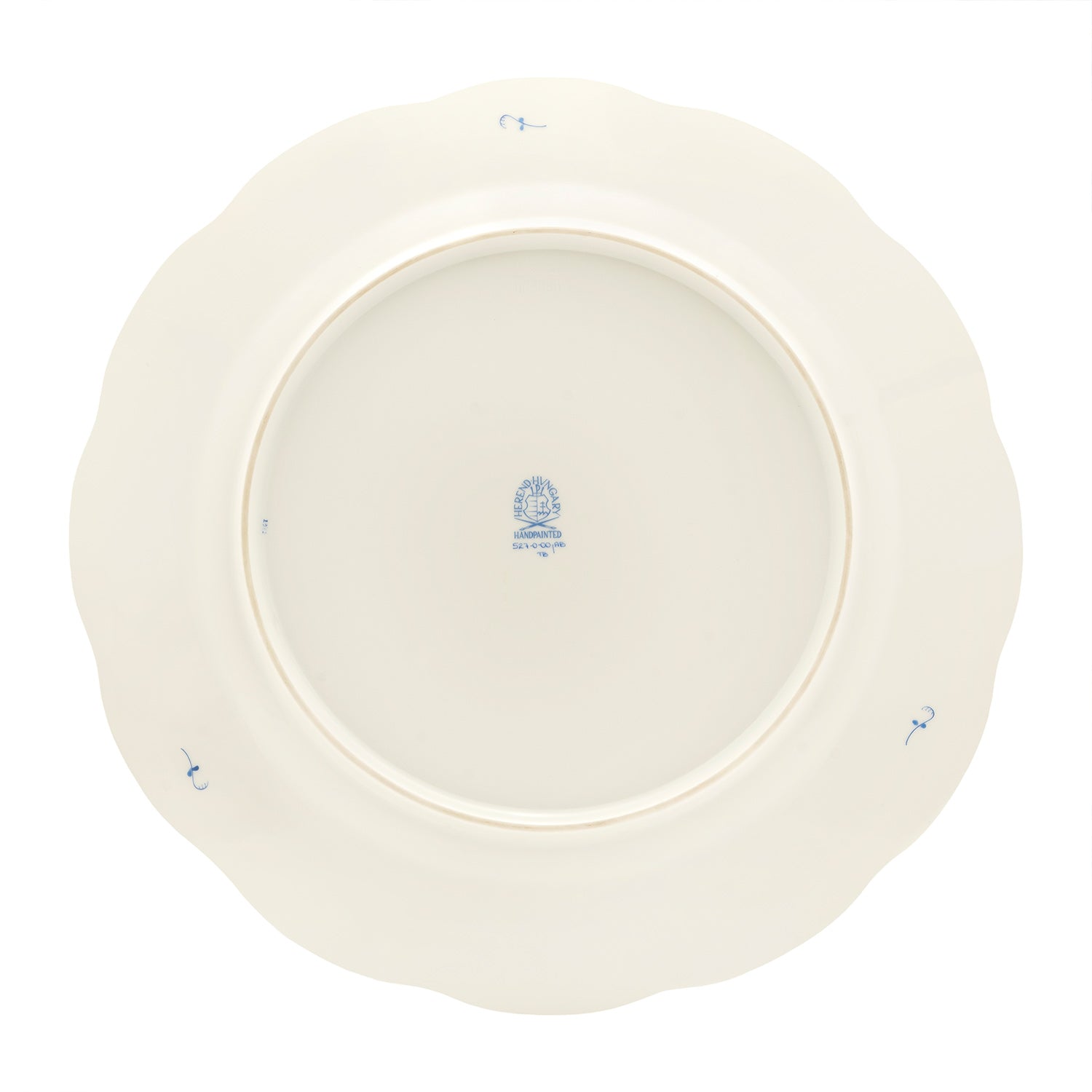
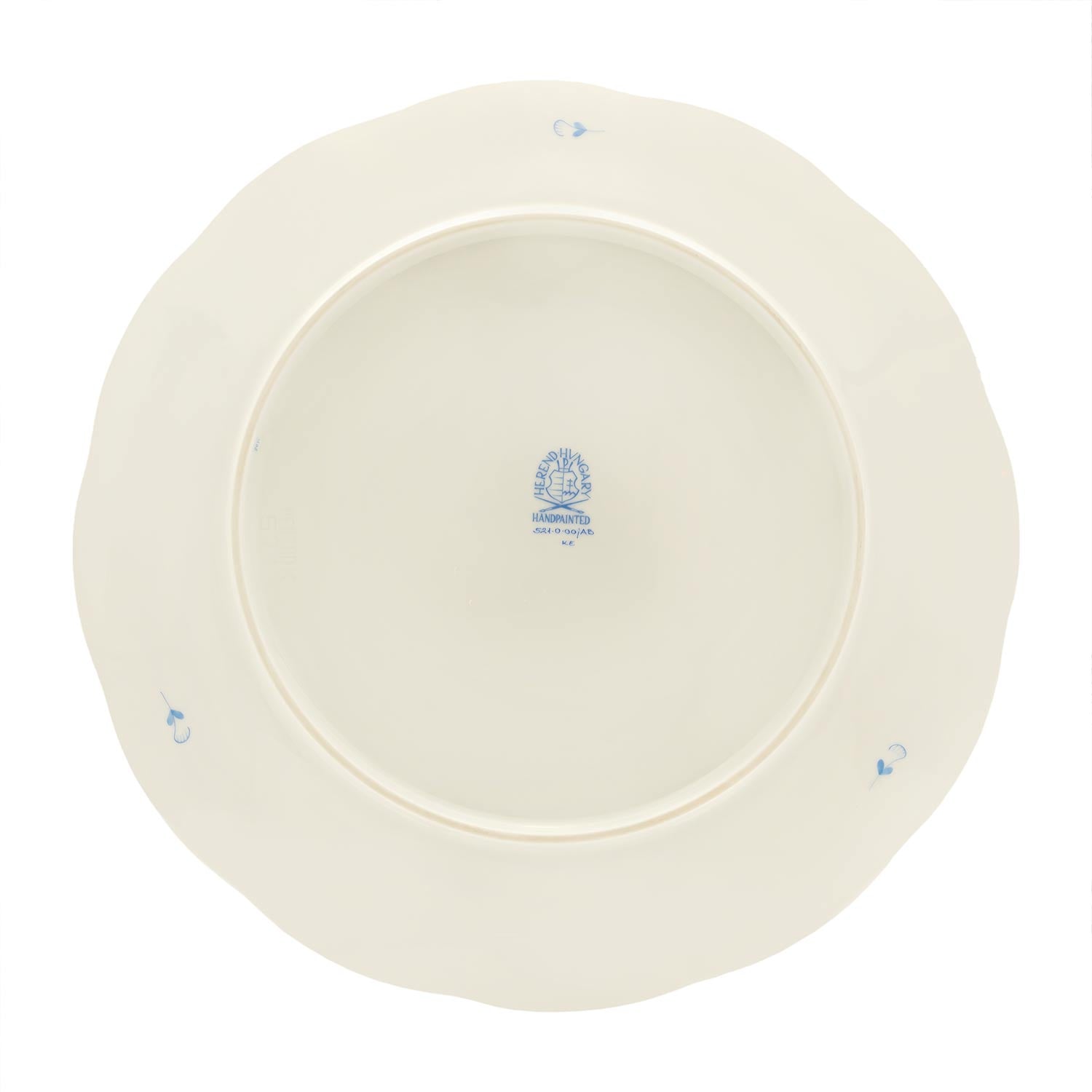
Herend is the oldest and most distinguished hand-painted porcelain manufactory in Hungary, established in the town of Herend in 1826. For nearly 200 years, every piece that has left the Herend manufactory has been painted entirely by hand by trained artists using traditional multi-stage techniques, with 24K gold or platinum applied and fired in a dedicated separate kiln stage. No two Herend pieces are identical in their finest decorative details. This individual hand is what separates Herend from every other luxury porcelain house in the world: not merely the quality of the material, but the irreducible human presence in each object.

Herend achieved international recognition at the Great Exhibition of London in 1851, where its porcelain was displayed to considerable acclaim and brought to the attention of Queen Victoria — who purchased pieces at the exhibition and became one of the manufactory's most significant early patrons. This royal patronage gave Herend access to the European court market that defined its reputation throughout the 19th century. The Queen Victoria pattern, one of Herend's most celebrated and enduring designs, is named for this historic connection. Herend has since supplied porcelain to royalty, heads of state, and distinguished collectors worldwide, holding royal warrants from multiple European courts.

Thomas Goode India is an authorised Herend retailer in India — one of the few luxury retail channels through which genuine Herend hand-painted porcelain is available on the Indian subcontinent. The collection at The Oberoi Hotel, New Delhi and at thomasgoode.in is among the most comprehensively stocked Herend presentations in India, spanning tableware, serving pieces, decorative vases, figurines, sacred sculptures, and the Apponyi collection across all three colourways.

The Herend Craft Process

What Hand-Painting at Herend Actually Means

Hand-painting at Herend is not a finishing process applied over a machine-formed or transfer-decorated base. It is the primary decorative act, and it involves a sequence of separate stages — each requiring individual skill, each requiring a separate kiln firing — that together produce the depth, richness, and individuality of a genuine Herend piece.

The process begins with the porcelain body: hard-paste porcelain, fired at temperatures above 1400°C at the Herend manufactory in Hungary, producing a dense, non-porous material of exceptional whiteness and hardness. After the first firing produces the bisque form, the glaze is applied and the piece is fired again. Underglaze colour — the deepest layer of painted decoration — is then applied by hand with fine brushes by Herend's trained painters, using pigments that must be interpreted from their unfired appearance to their final fired colour by an artist with years of experience. A further kiln firing fixes the underglaze decoration permanently beneath the glaze surface.

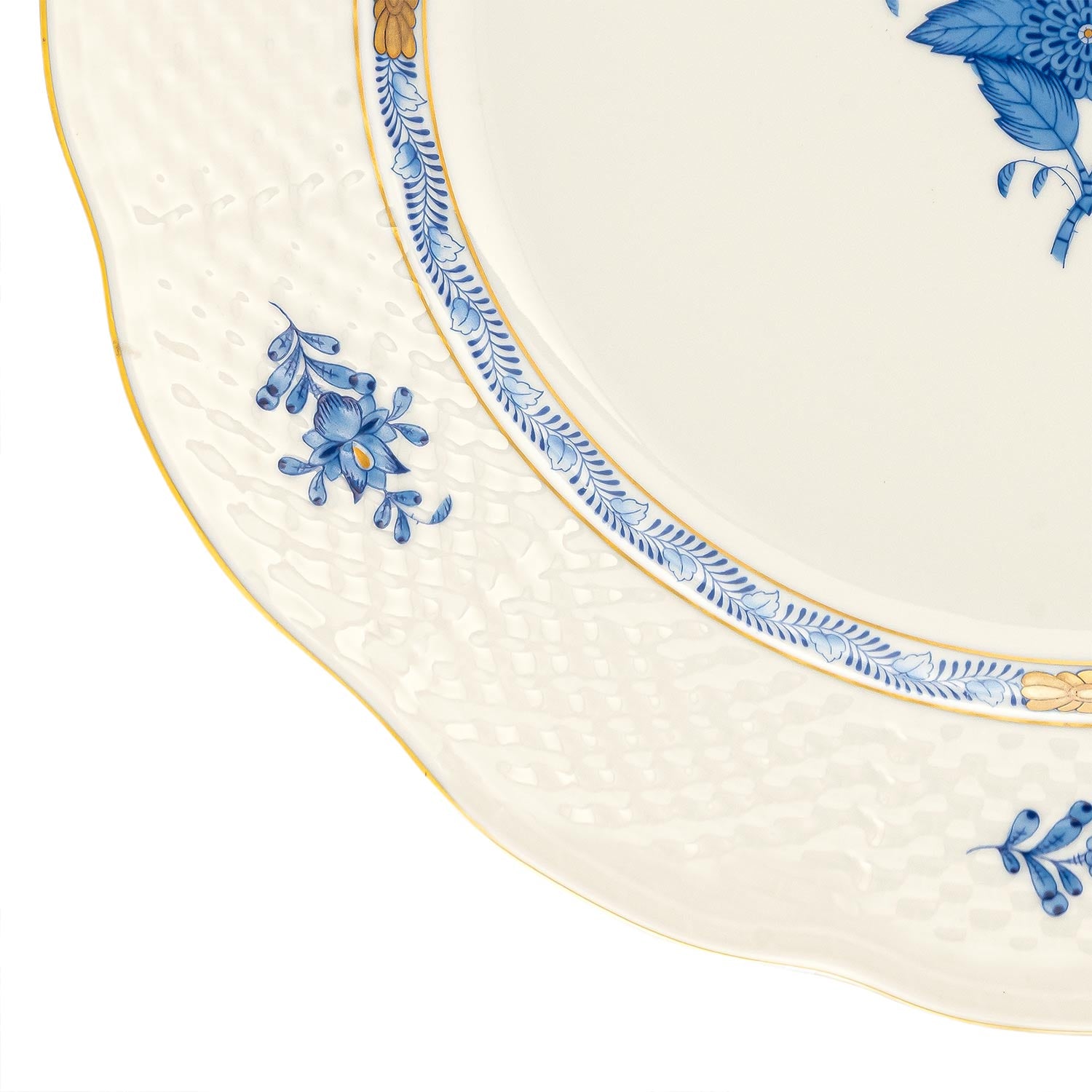
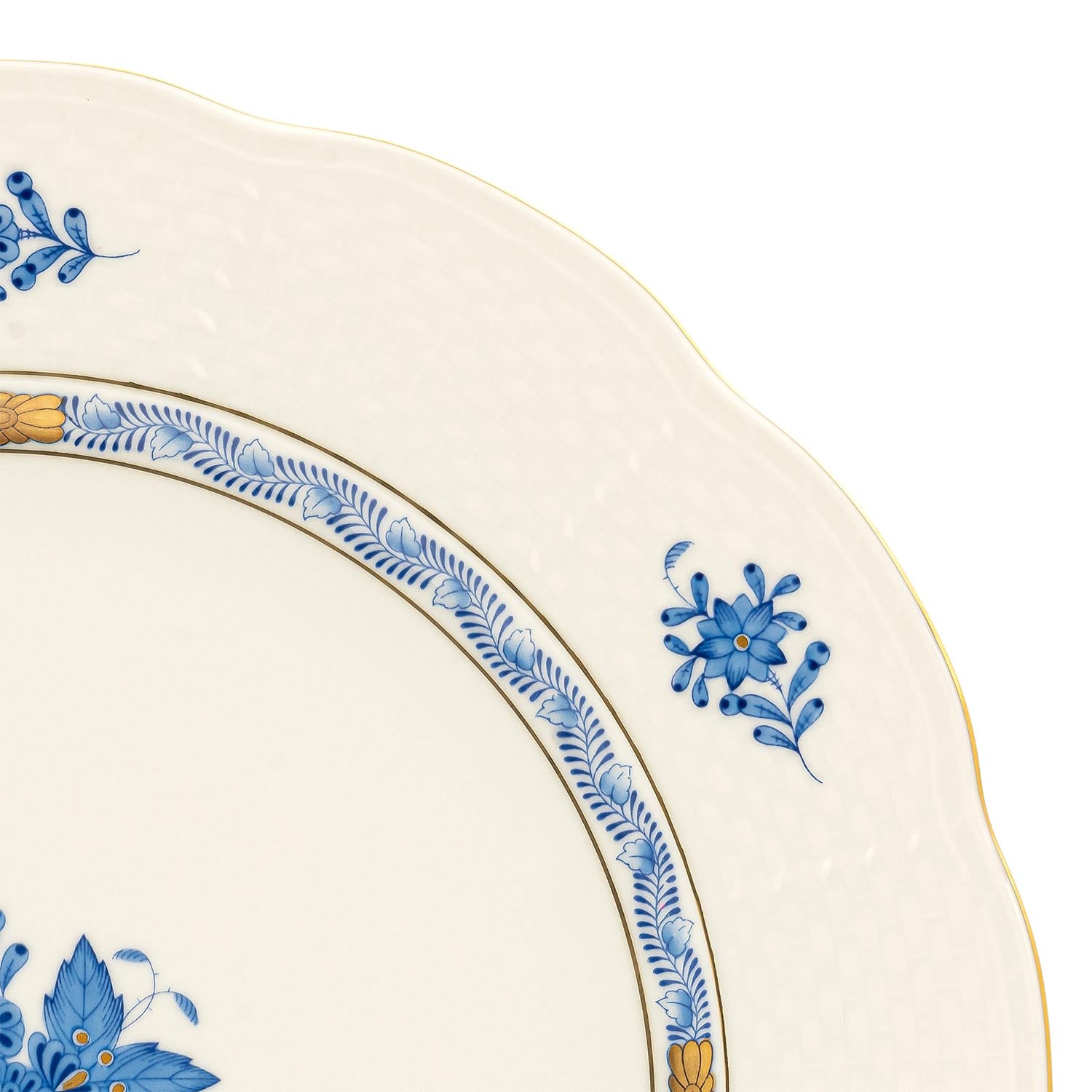
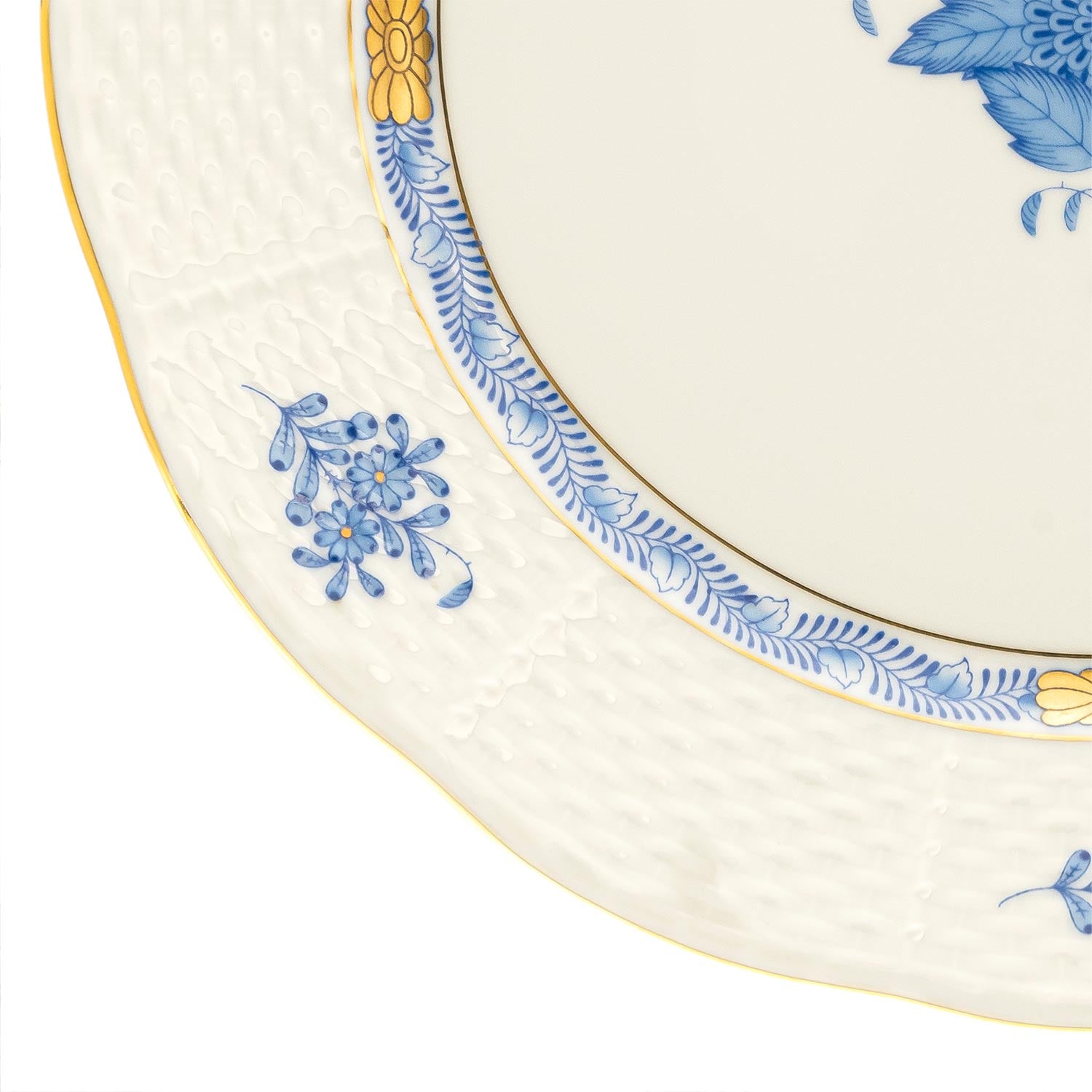
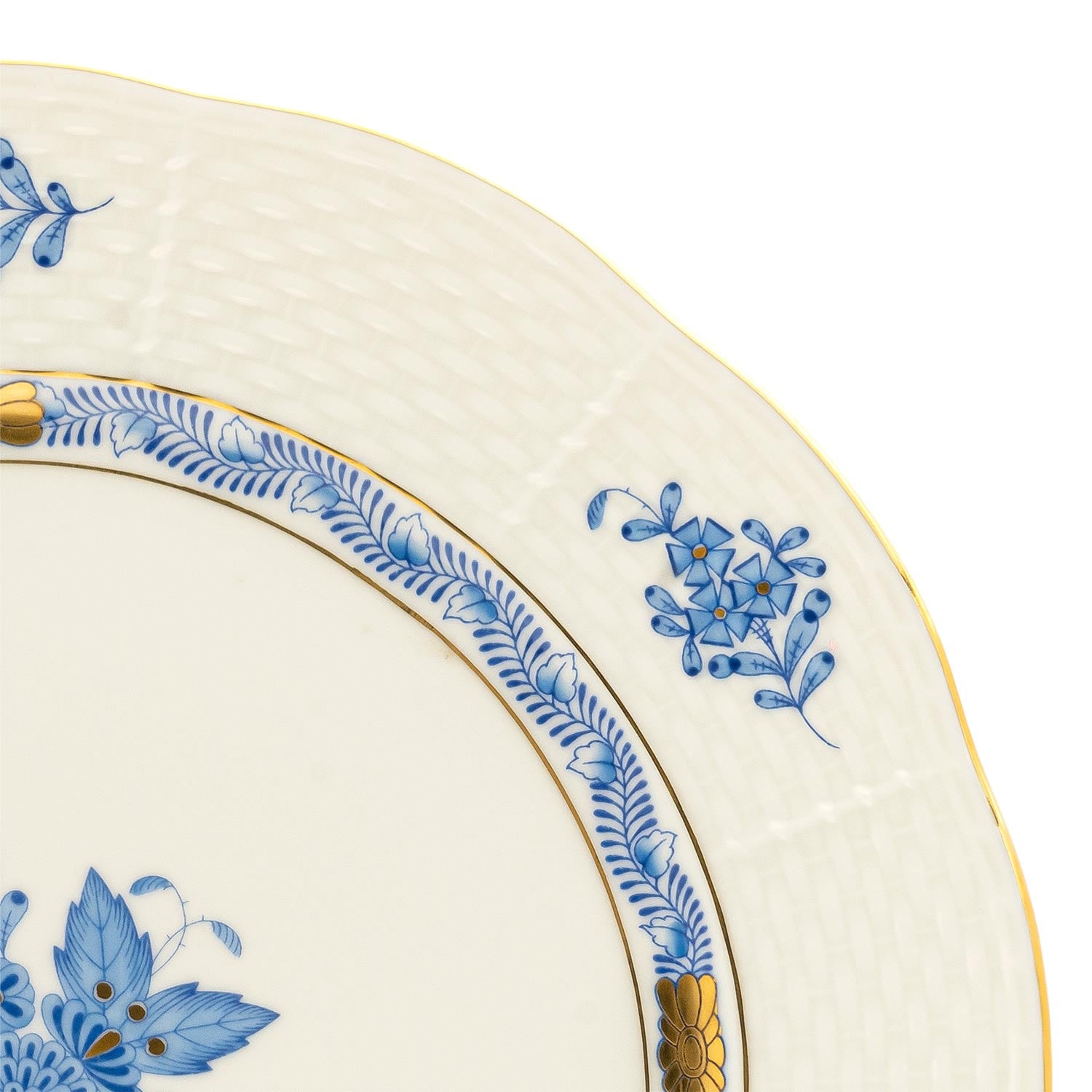
Overglaze colour — the secondary painted layer that gives Herend's surfaces their characteristic depth and complexity — is then applied by hand on top of the glaze, in a separate decorating process, and fired again. Finally, the 24K gold or platinum detailing — applied to rims, handles, motif highlights, and decorative accents — is laid by hand and fired in a dedicated precious metal kiln. The entire sequence, from first painting to final gold firing, involves upwards of ten individual hand operations for a complex piece such as a Herend dinner plate or tea cup.

The result is a painted surface with the depth of accumulated layers with colour beneath the glaze, colour above the glaze, and fired metal at the surface — that produces the optical quality unique to genuine Herend porcelain. Holding a Herend plate to light reveals this depth: the colours shift and the gold catches differently from different angles, because the surface is not flat but layered.

What "No Two Pieces Are Identical" Means in Practice

Every Herend artist develops a personal hand — a characteristic weight of brushstroke, a characteristic approach to the distribution of a motif across a plate's curved surface, a characteristic interpretation of the pigment-to-fired-colour translation. Over years of production within a single pattern, this personal hand accumulates into a subtle but genuine variation between pieces from different artists, and even between pieces from the same artist across different production dates.

This variation is not a quality defect. It is the evidence of human presence — the mark that distinguishes a hand-painted object from a mechanically decorated one. Collectors who build Herend services over time understand and embrace this variation: the slight difference in the placement of a flower head, the slight variation in the weight of a gold line, is not a flaw but an authentication.

Herend Pattern Families at Thomas Goode India

Apponyi

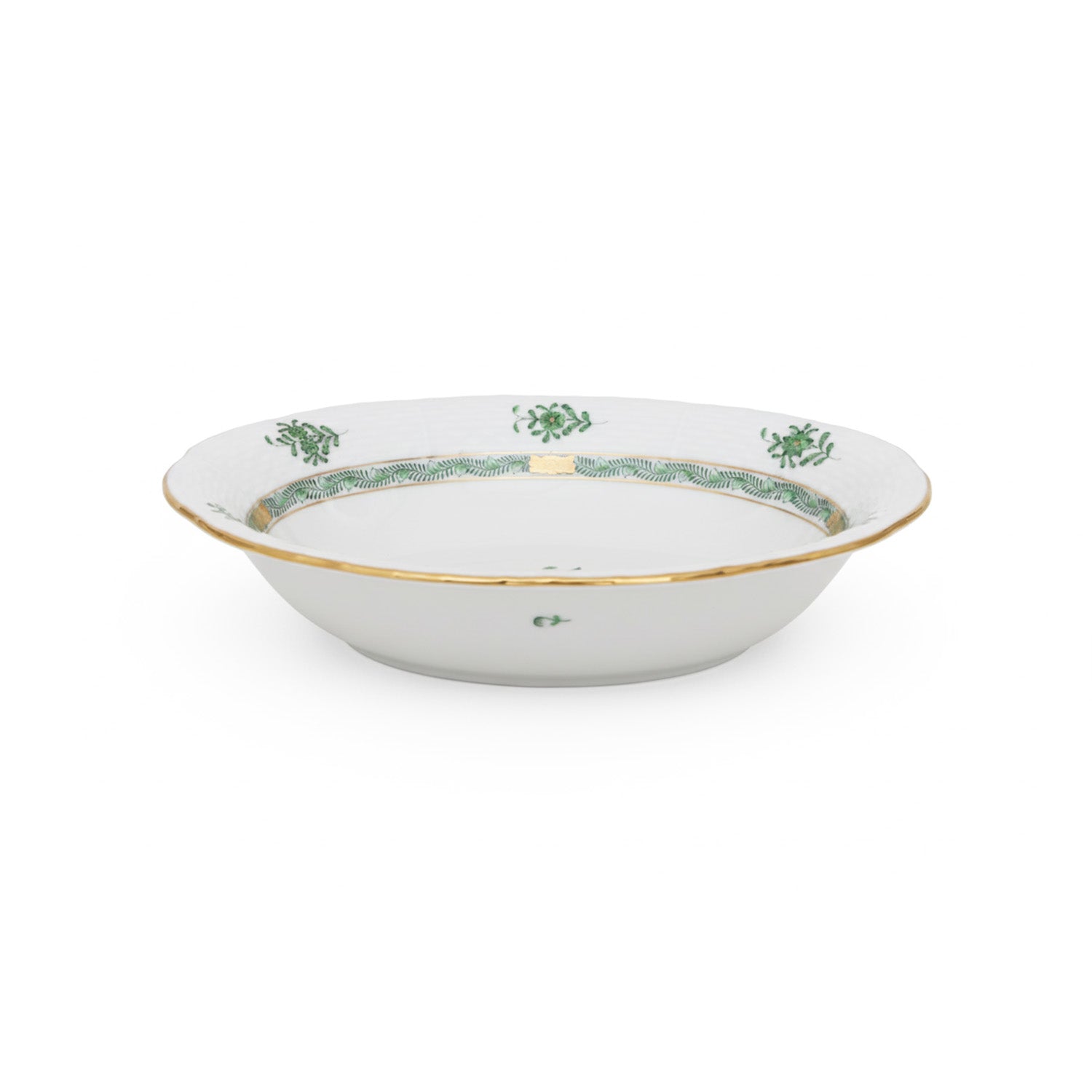
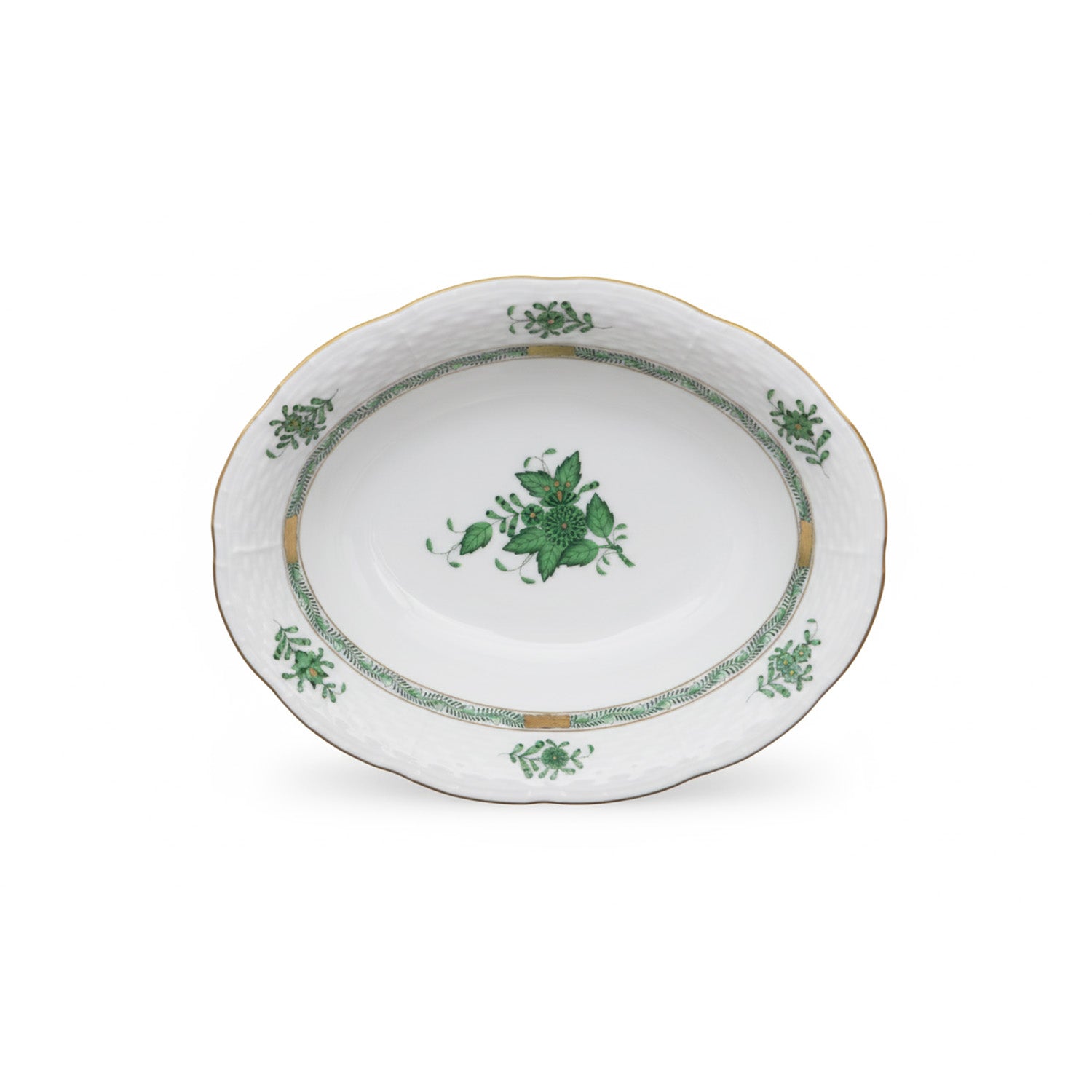
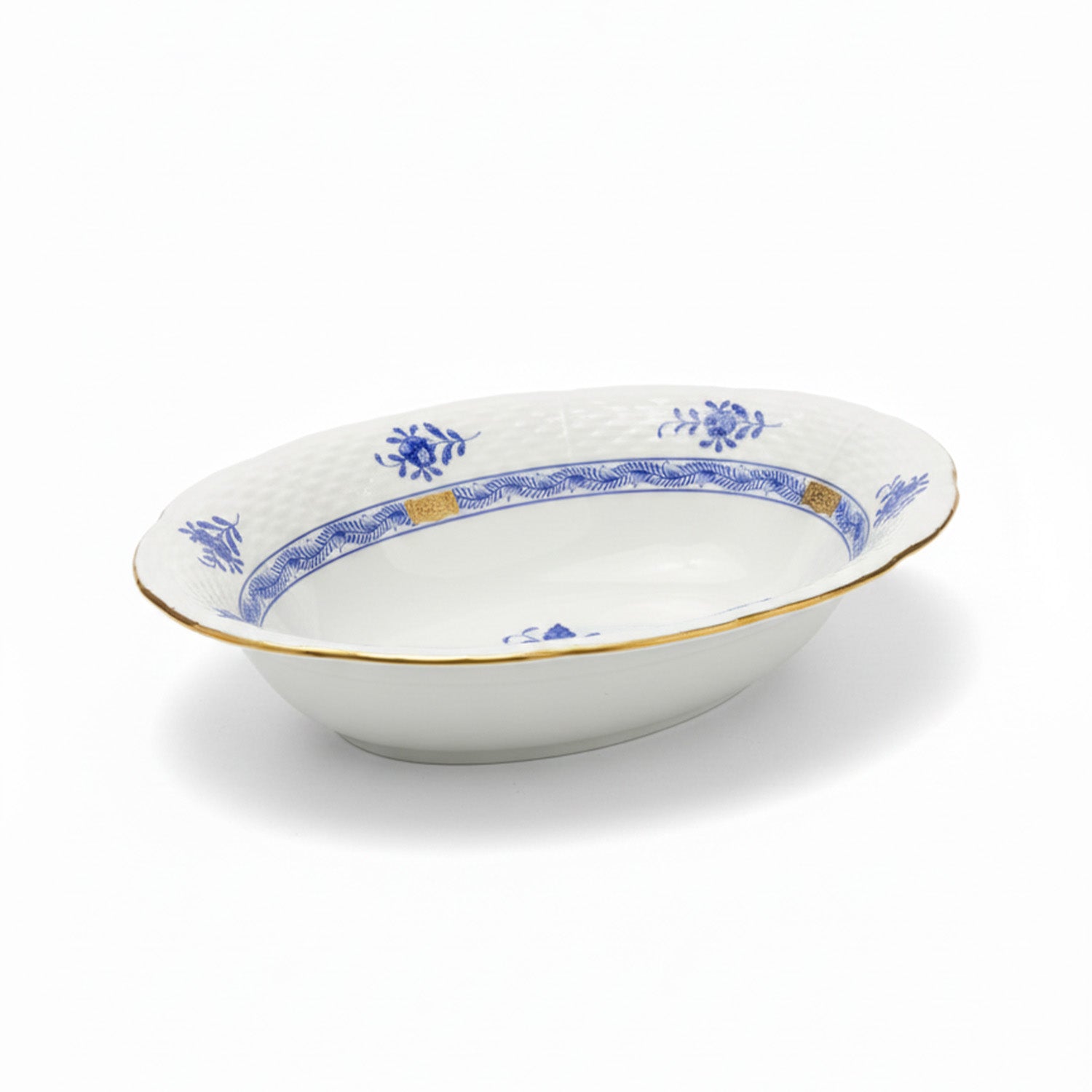
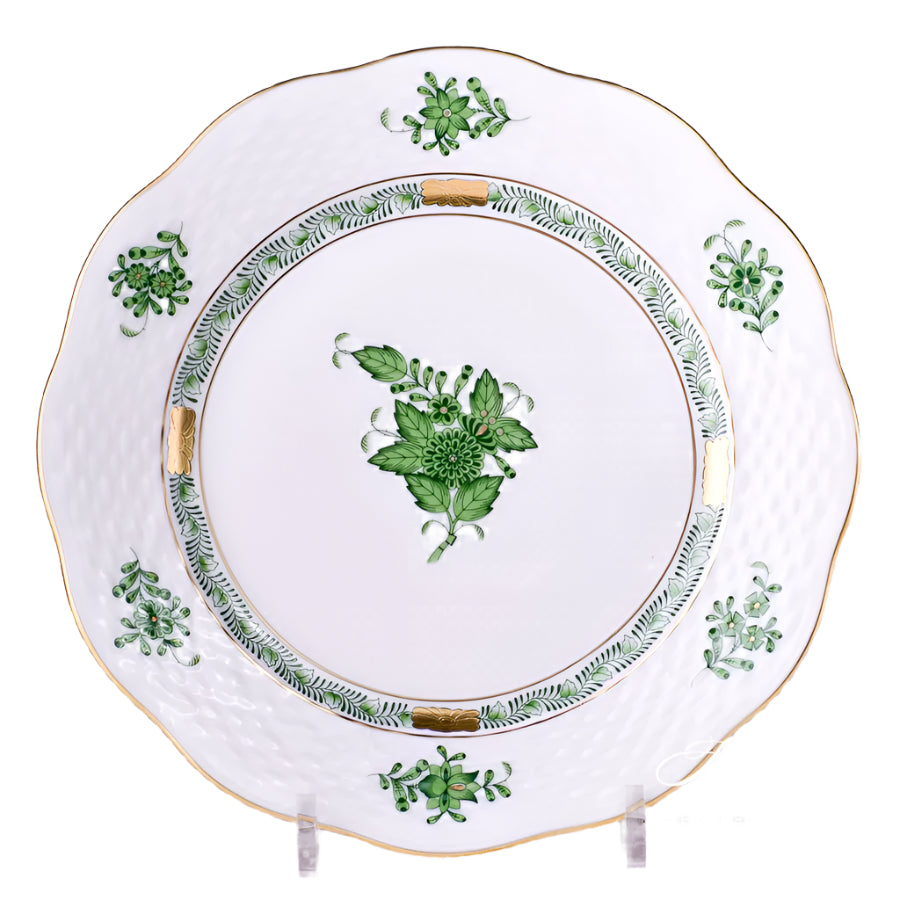
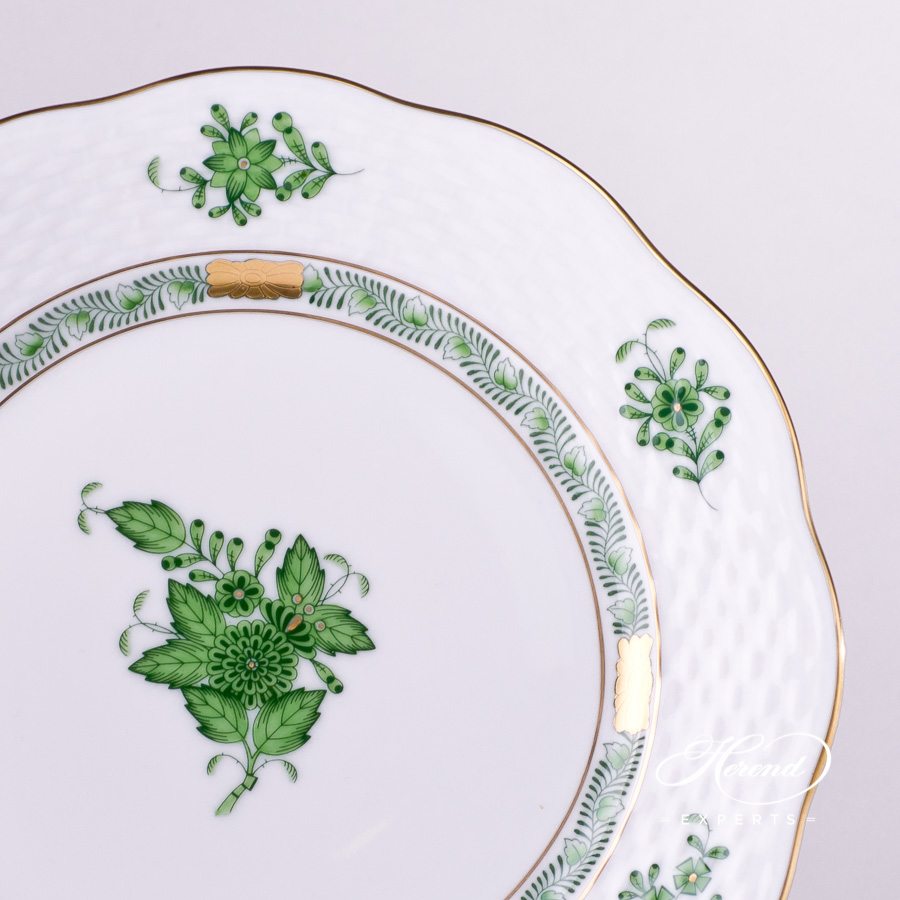
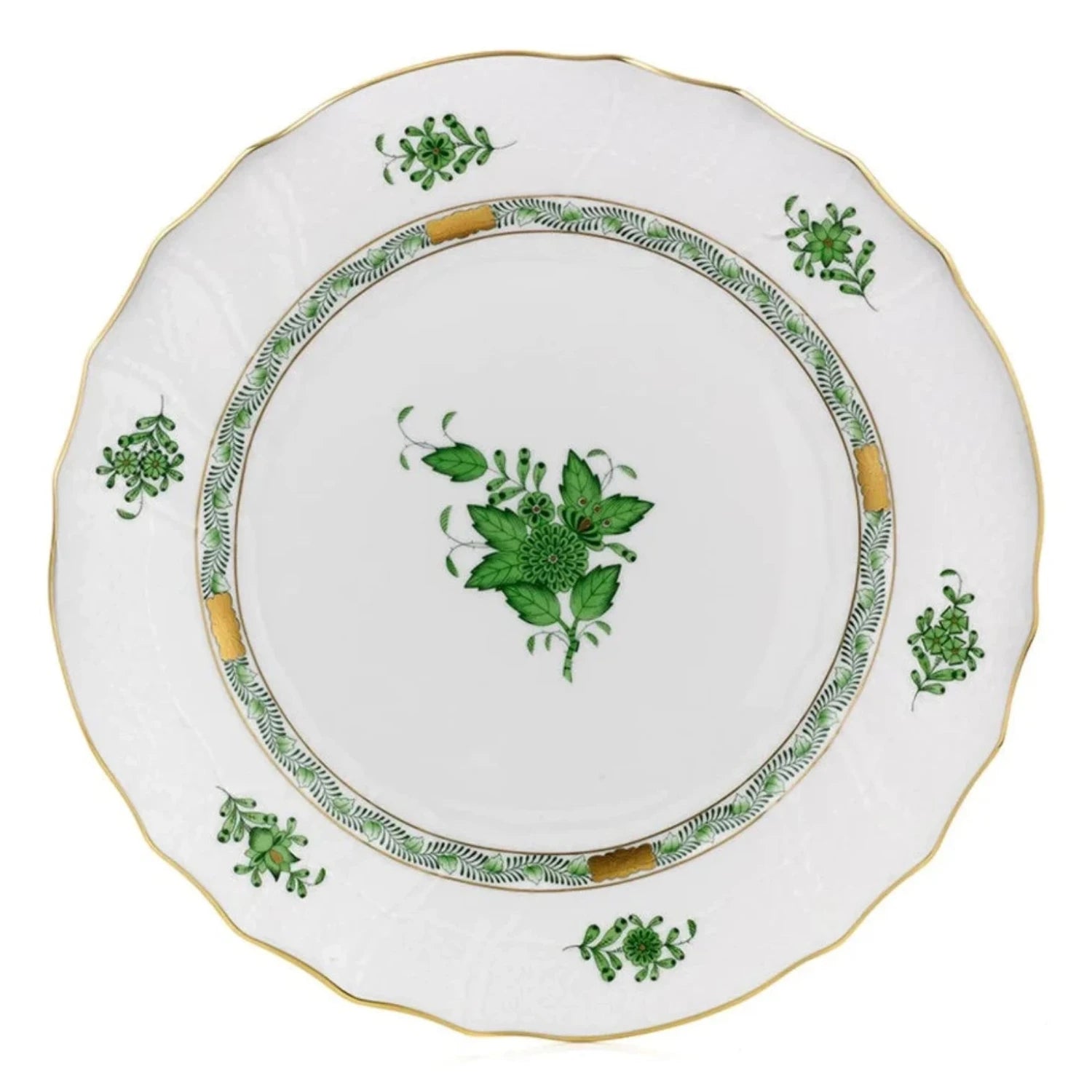
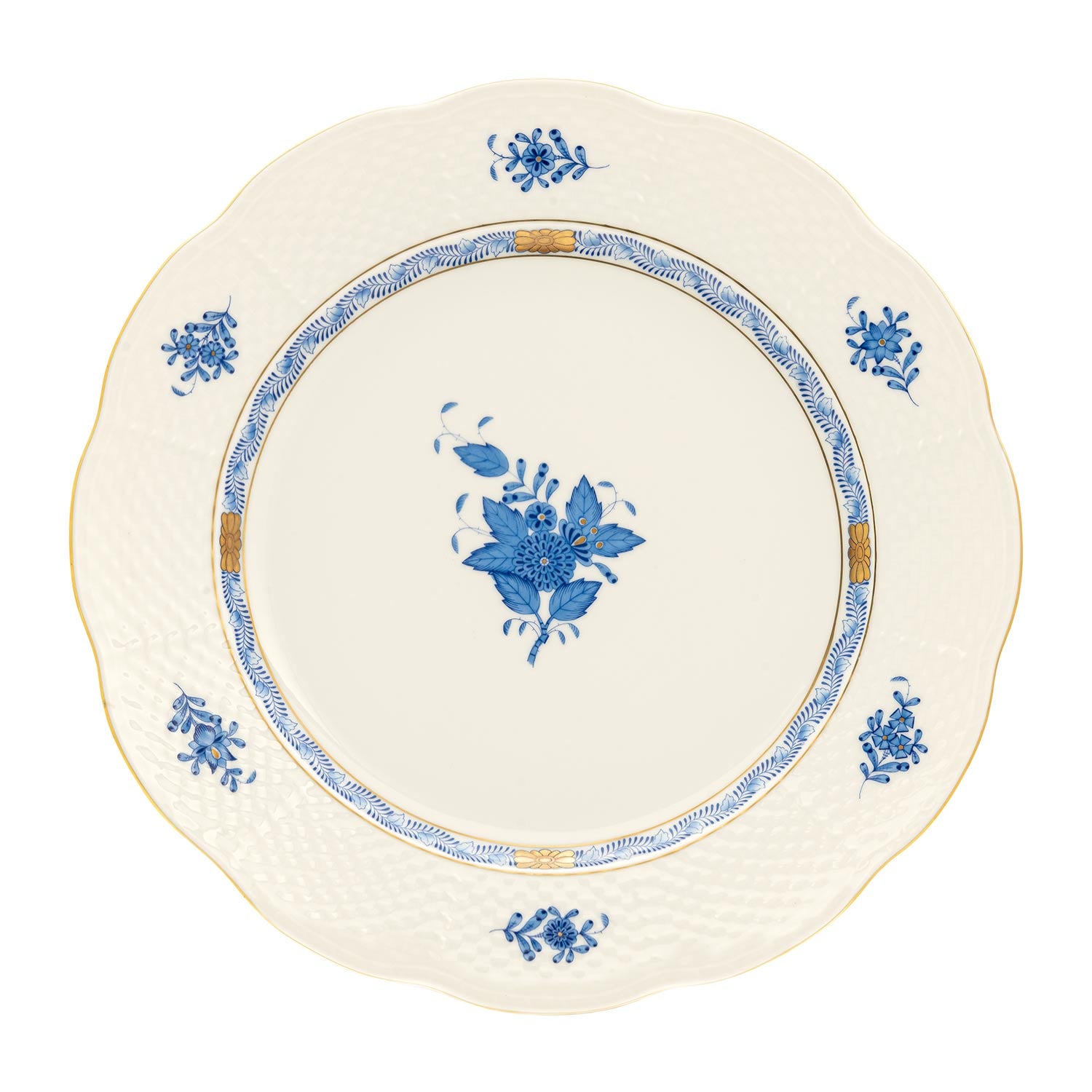
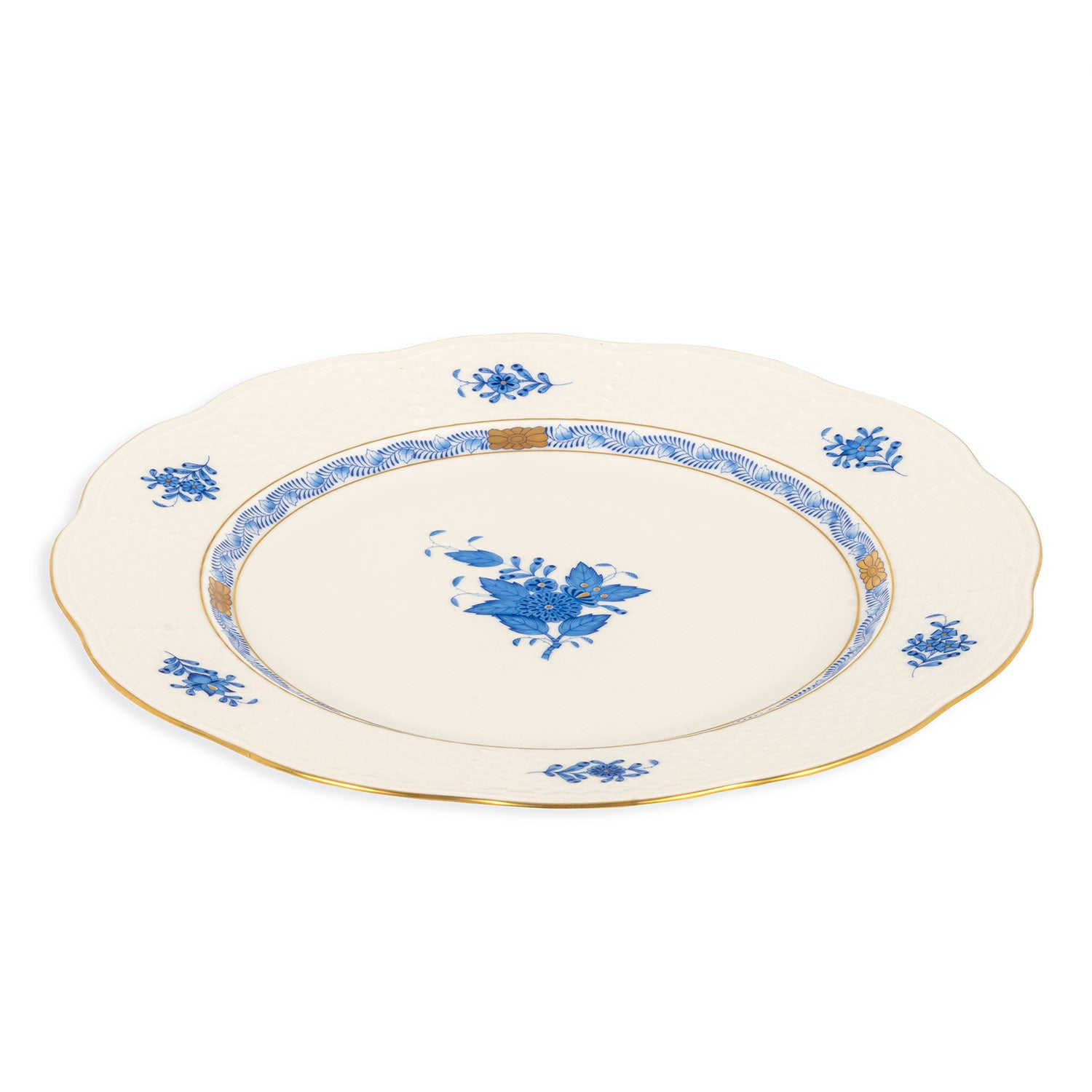
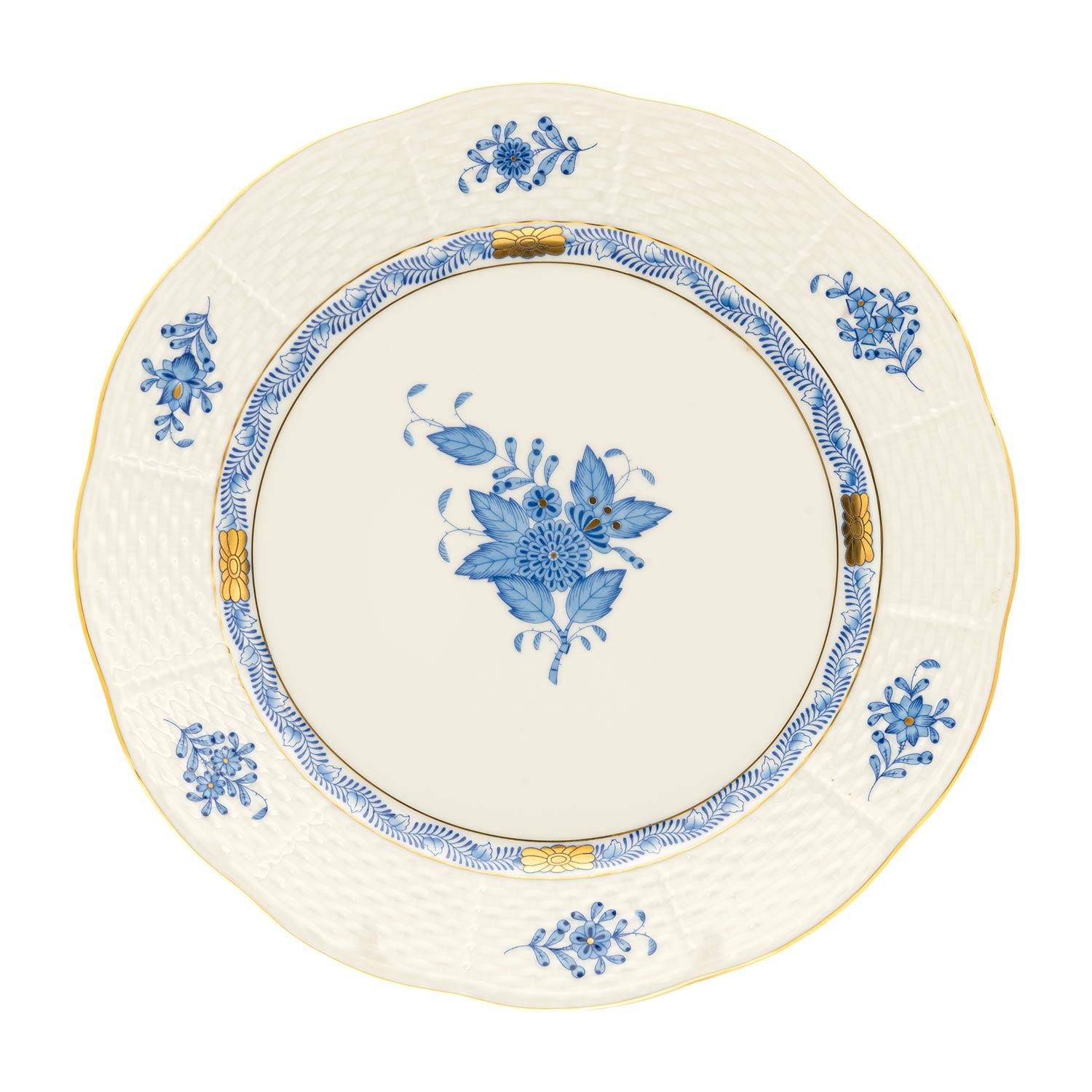
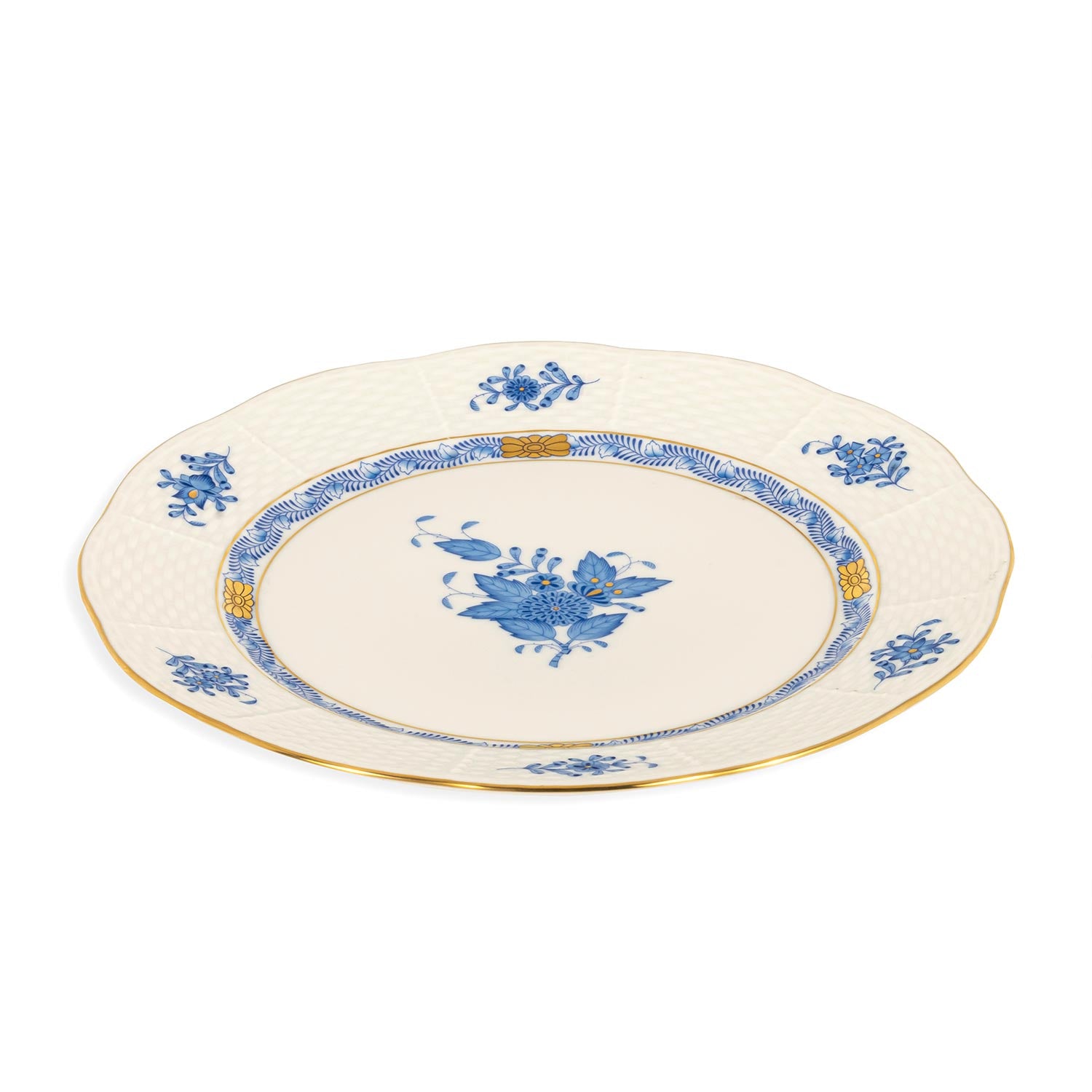
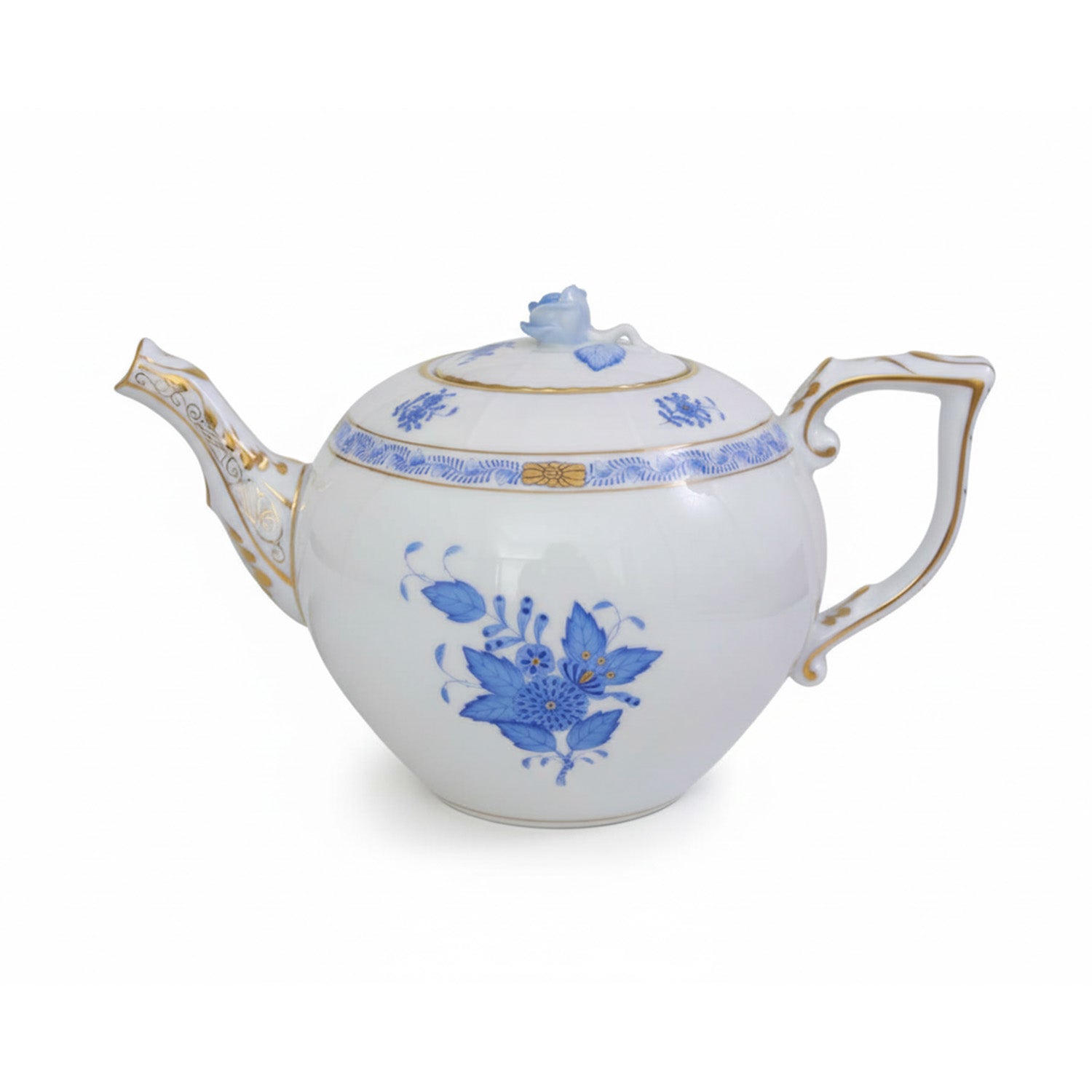
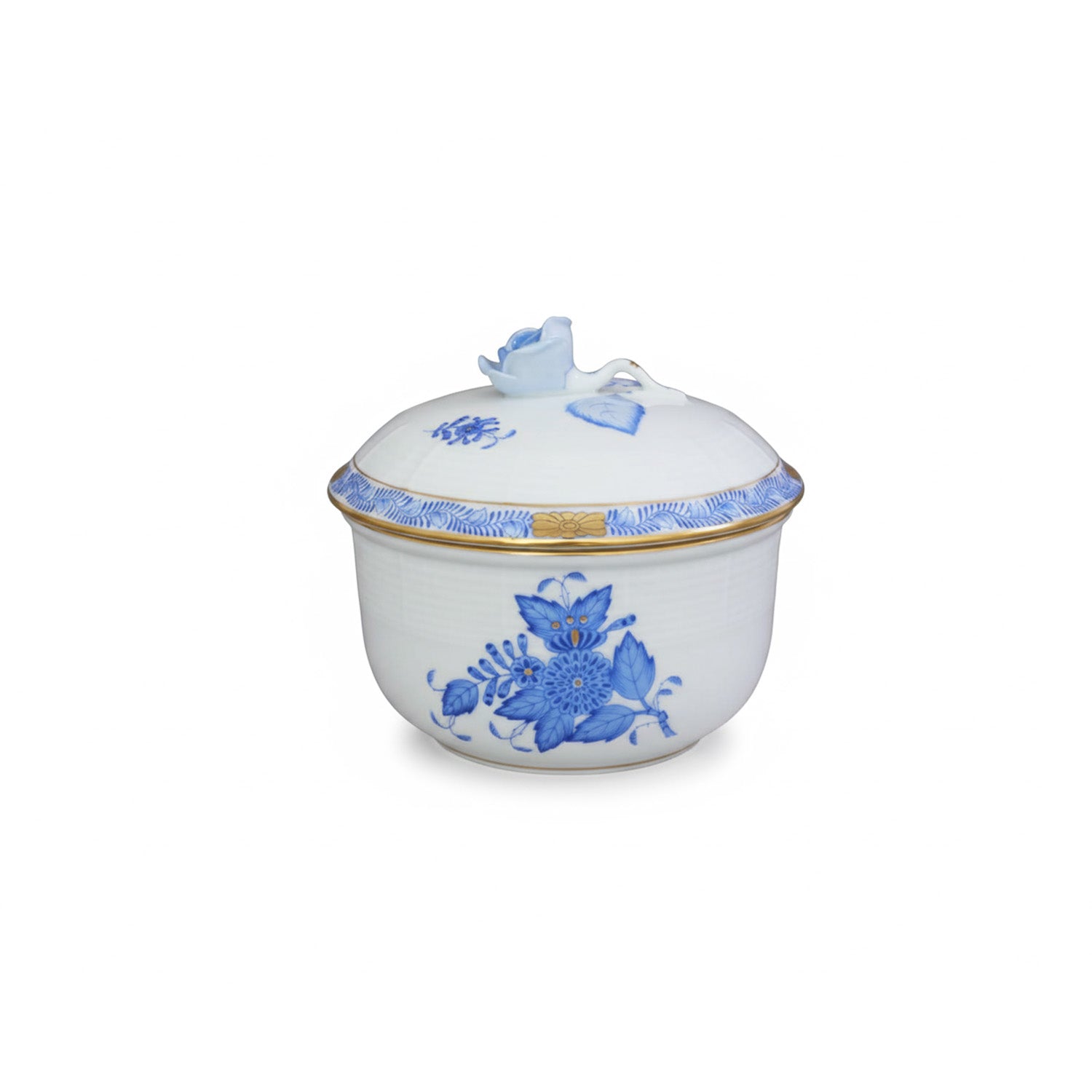
The Apponyi collection is the most complete Herend pattern family at Thomas Goode India, available in three colourways — Apponyi Blue, Apponyi Rust, and Apponyi Green — across every tableware format. The Apponyi pattern, known internally at Herend as the "Chinese Bouquet," is a dense botanical and floral composition with roots in East Asian decorative porcelain, adapted through the Central European court tradition and in continuous production at Herend since the mid-19th century. It is named after the Hungarian Apponyi aristocratic family whose patronage helped establish the design in Herend's repertoire.

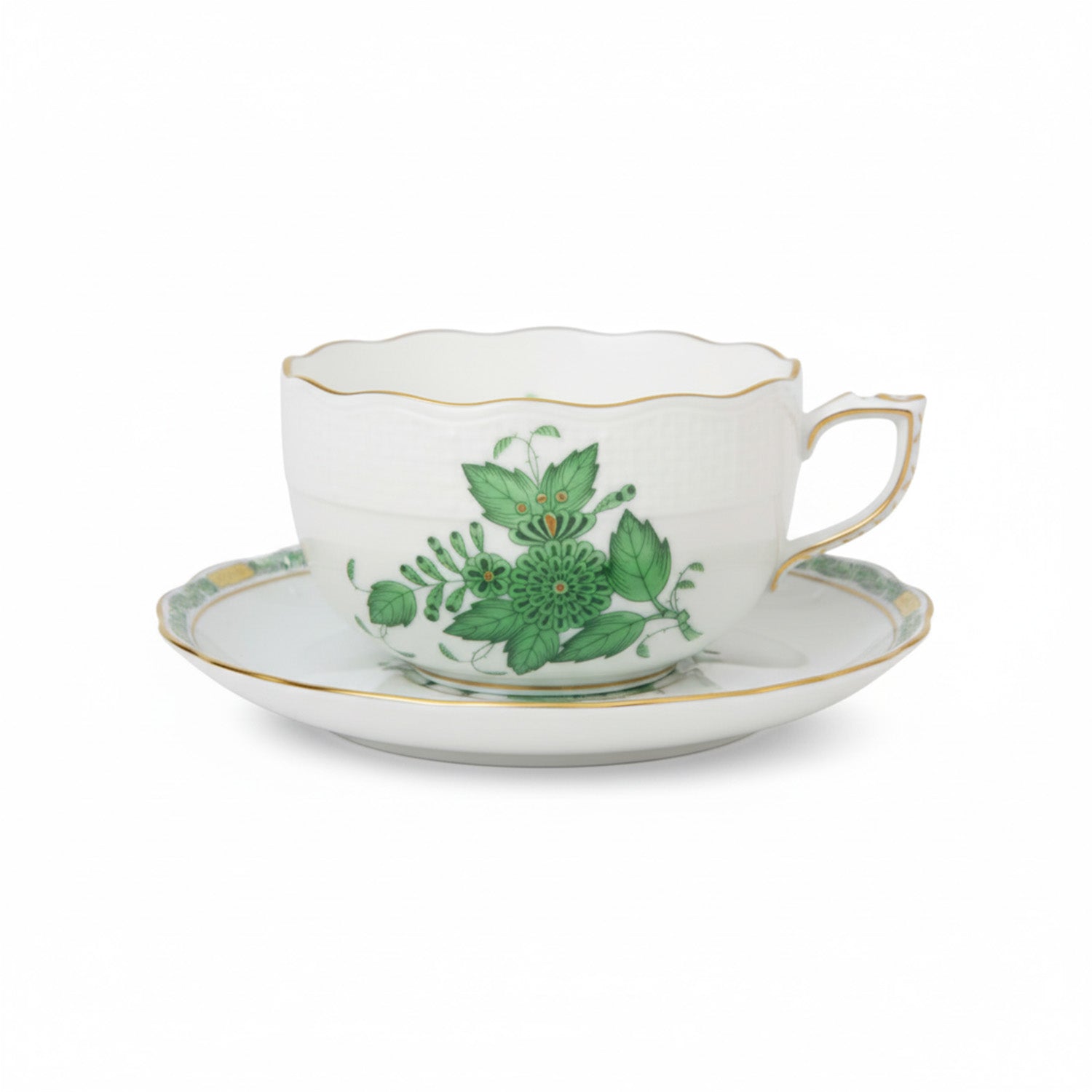
Apponyi Rust provides the most complete service depth: dinner plates (28 cm), lunch plates (25.5 cm), side plates (21 cm), dessert and bread plates, dessert bowls, oatmeal bowls, a 35 cm oval platter, a 25 cm serving bowl, katori bowls, a vegetable covered dish, a sauce boat, tea cup and saucer, and a 15-piece complete tea set. The full Apponyi collection is explored at thomasgoode.in/collections/apponyi.

Queen Victoria

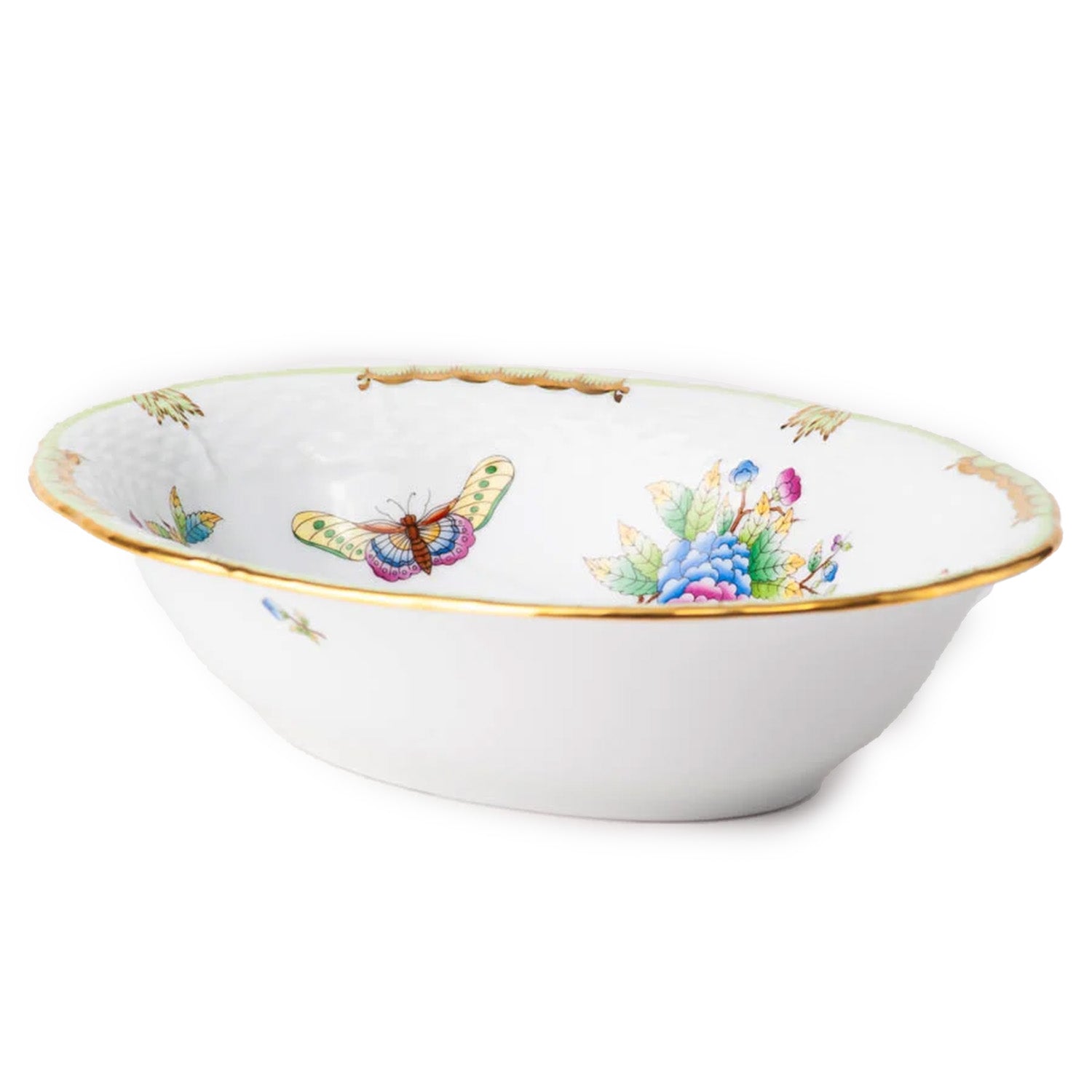
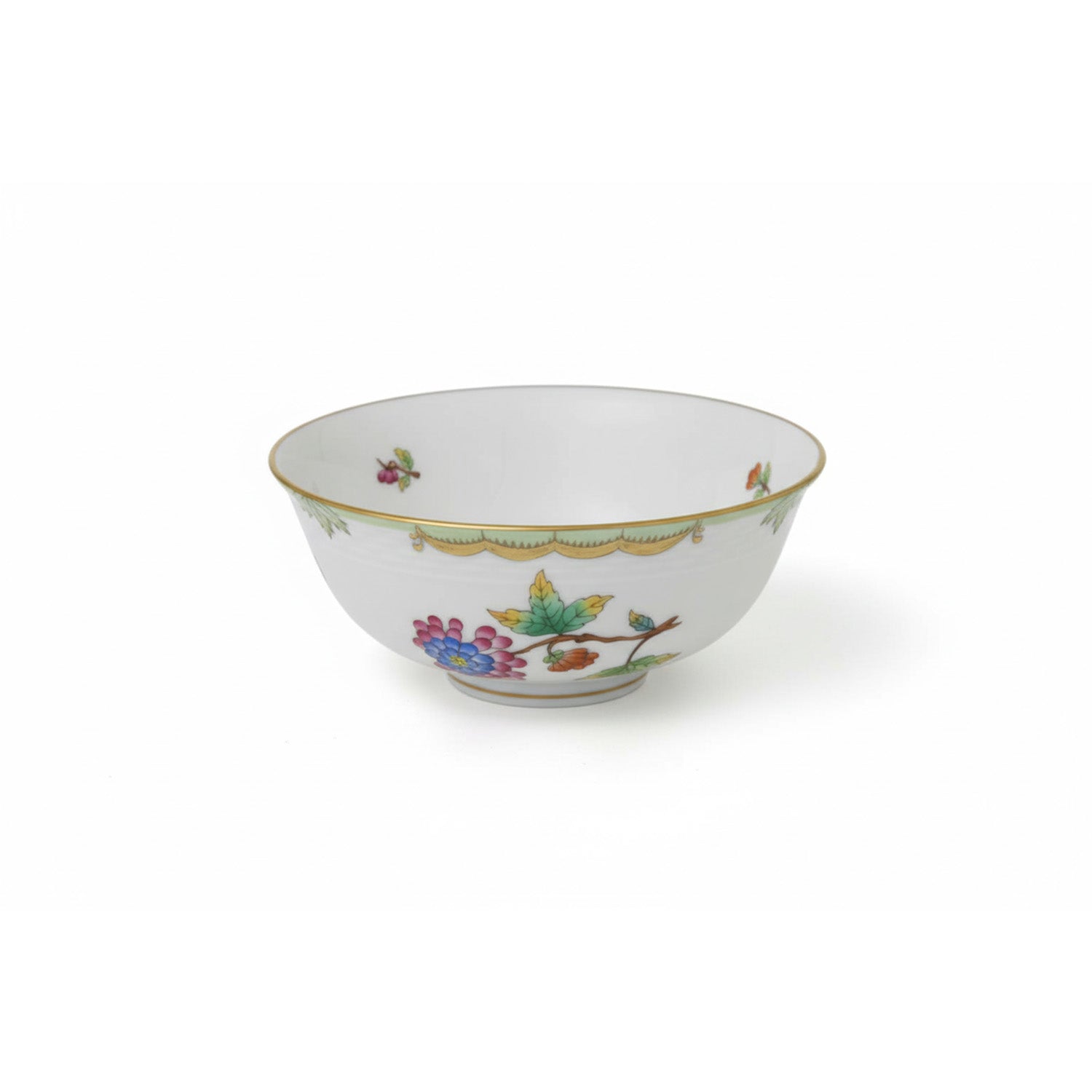
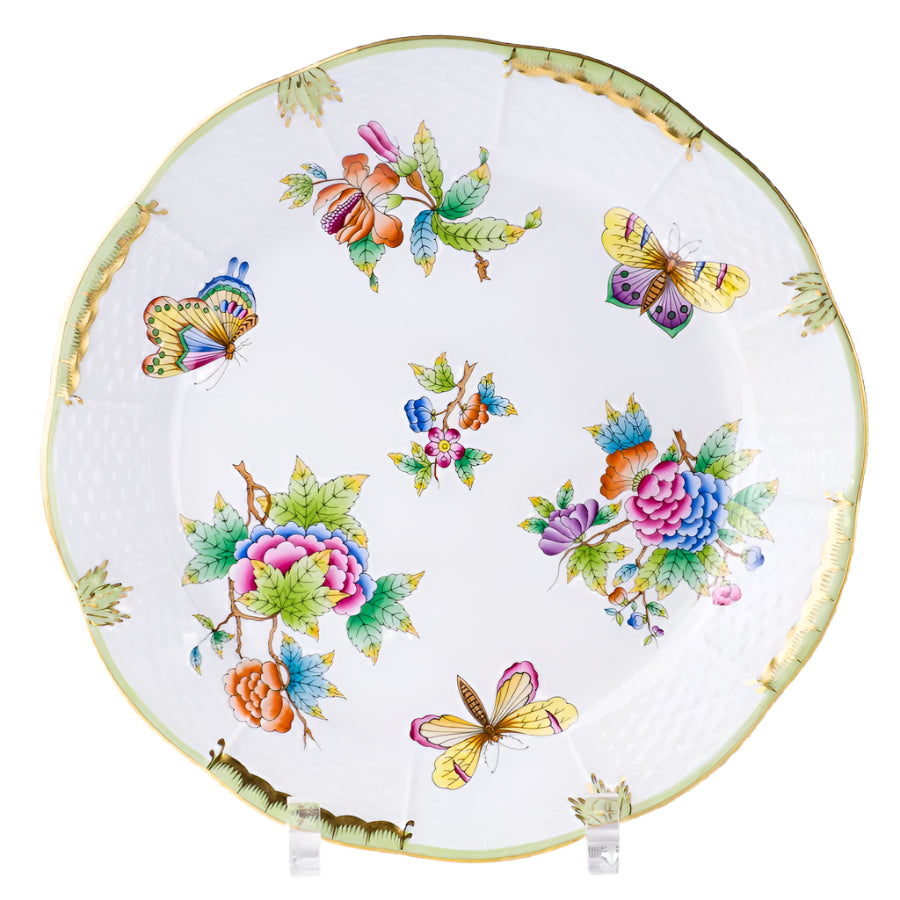
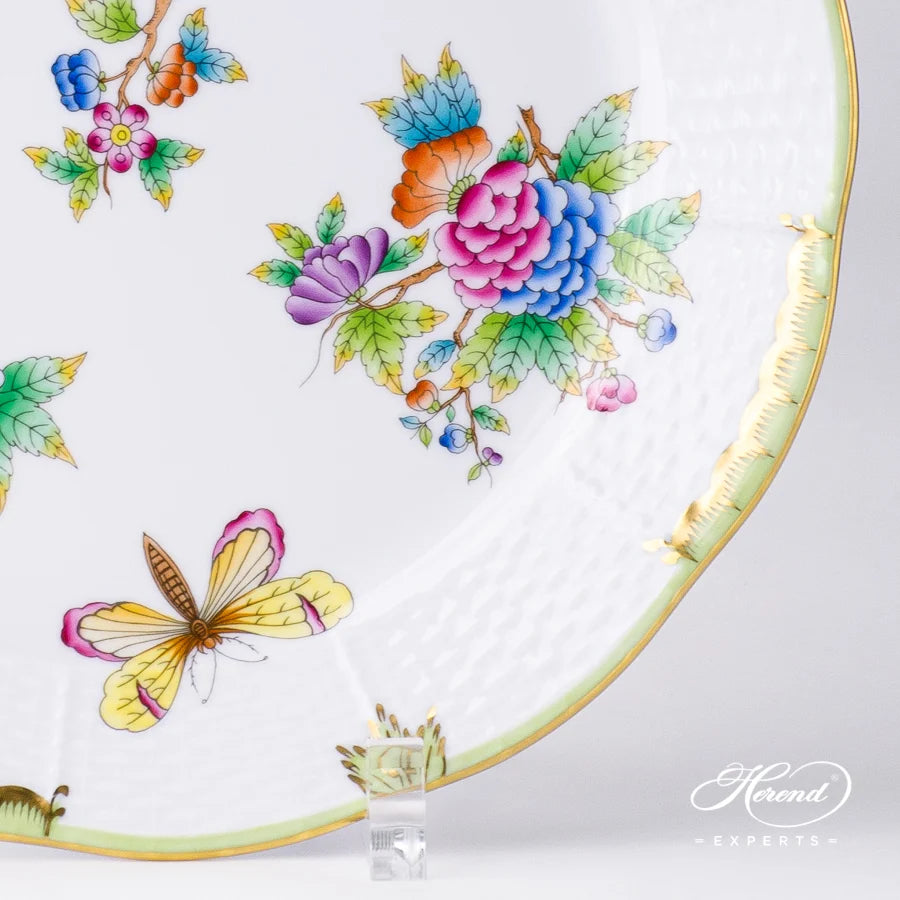
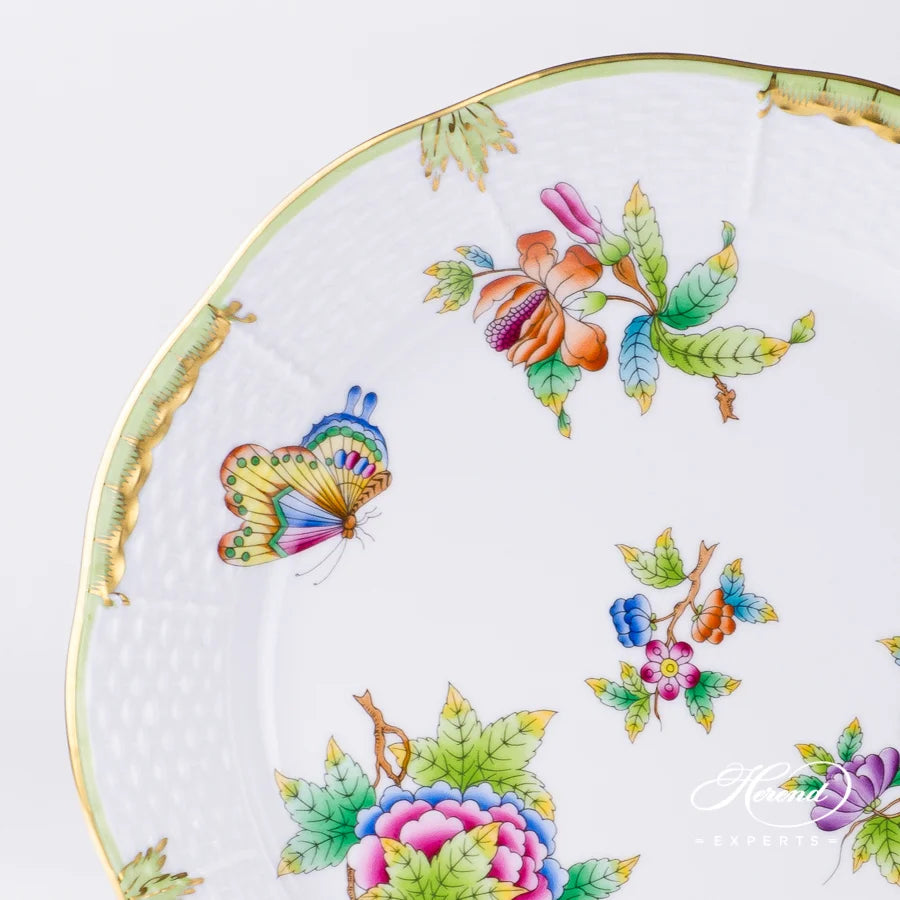
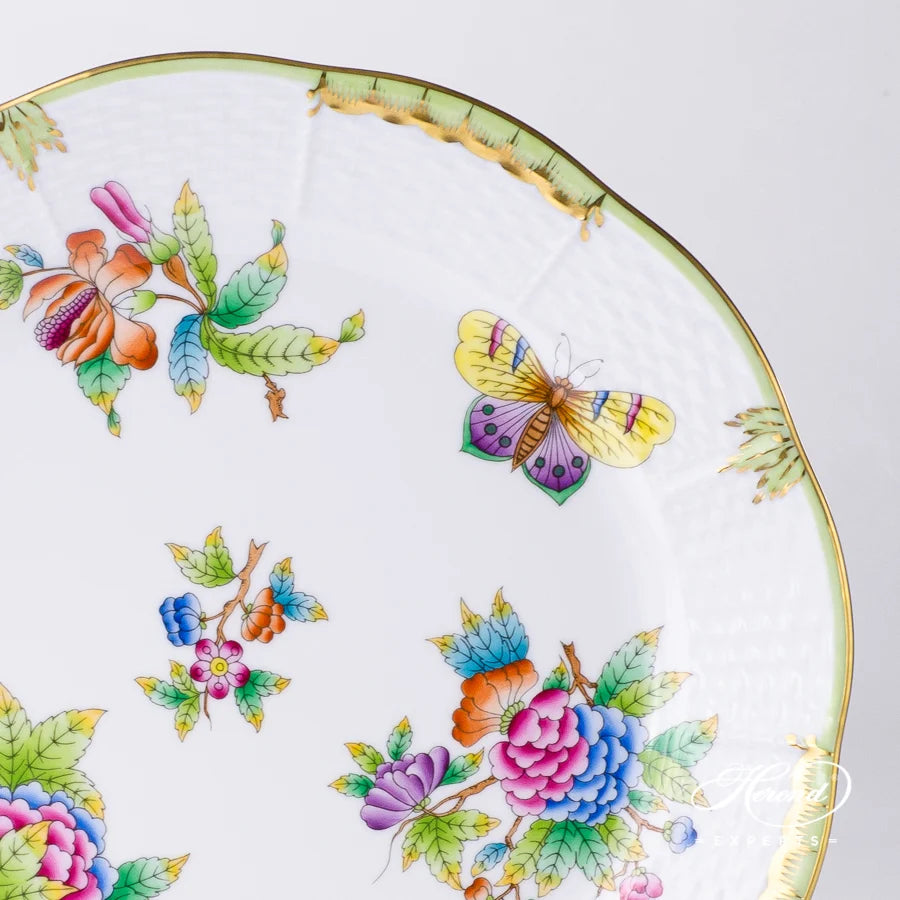
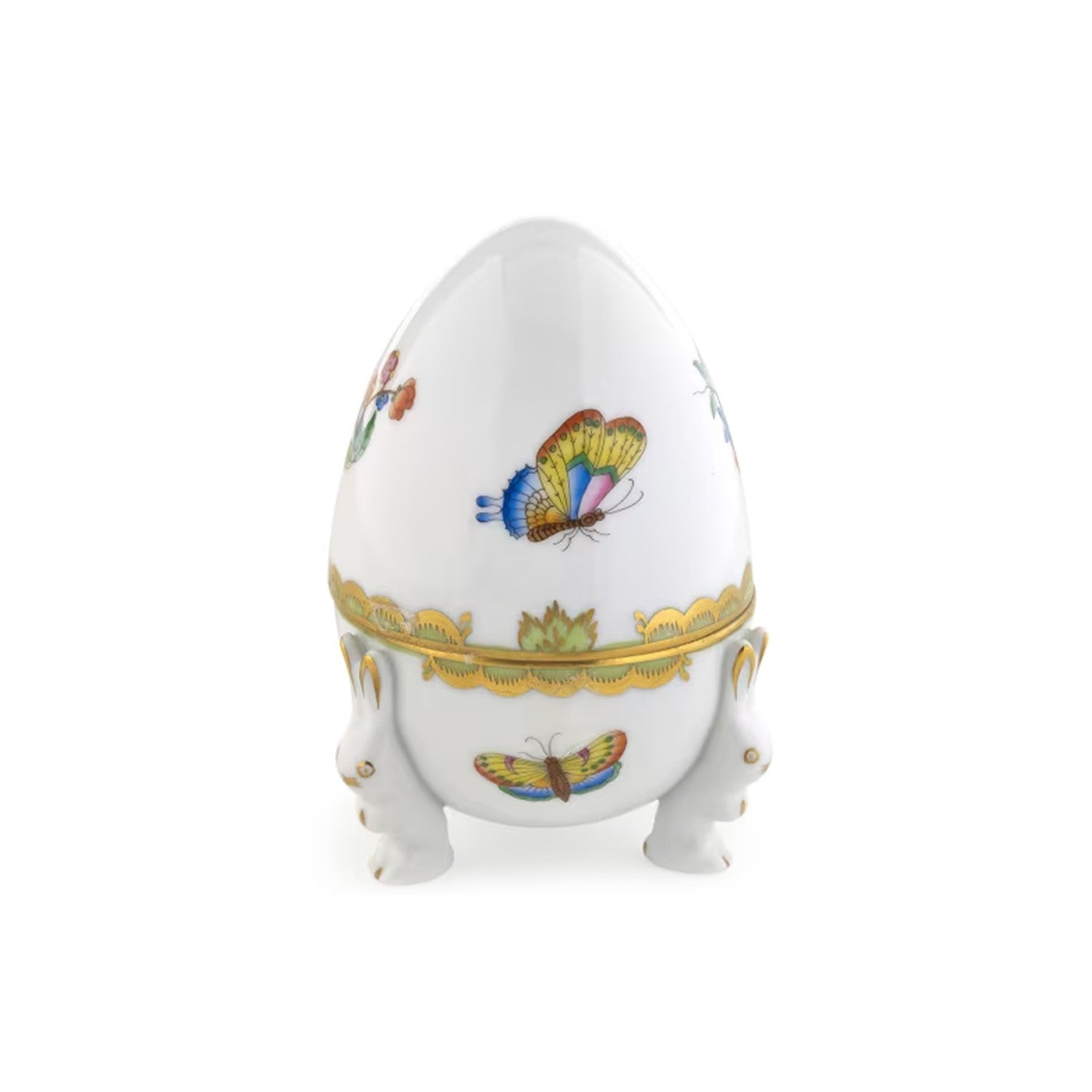
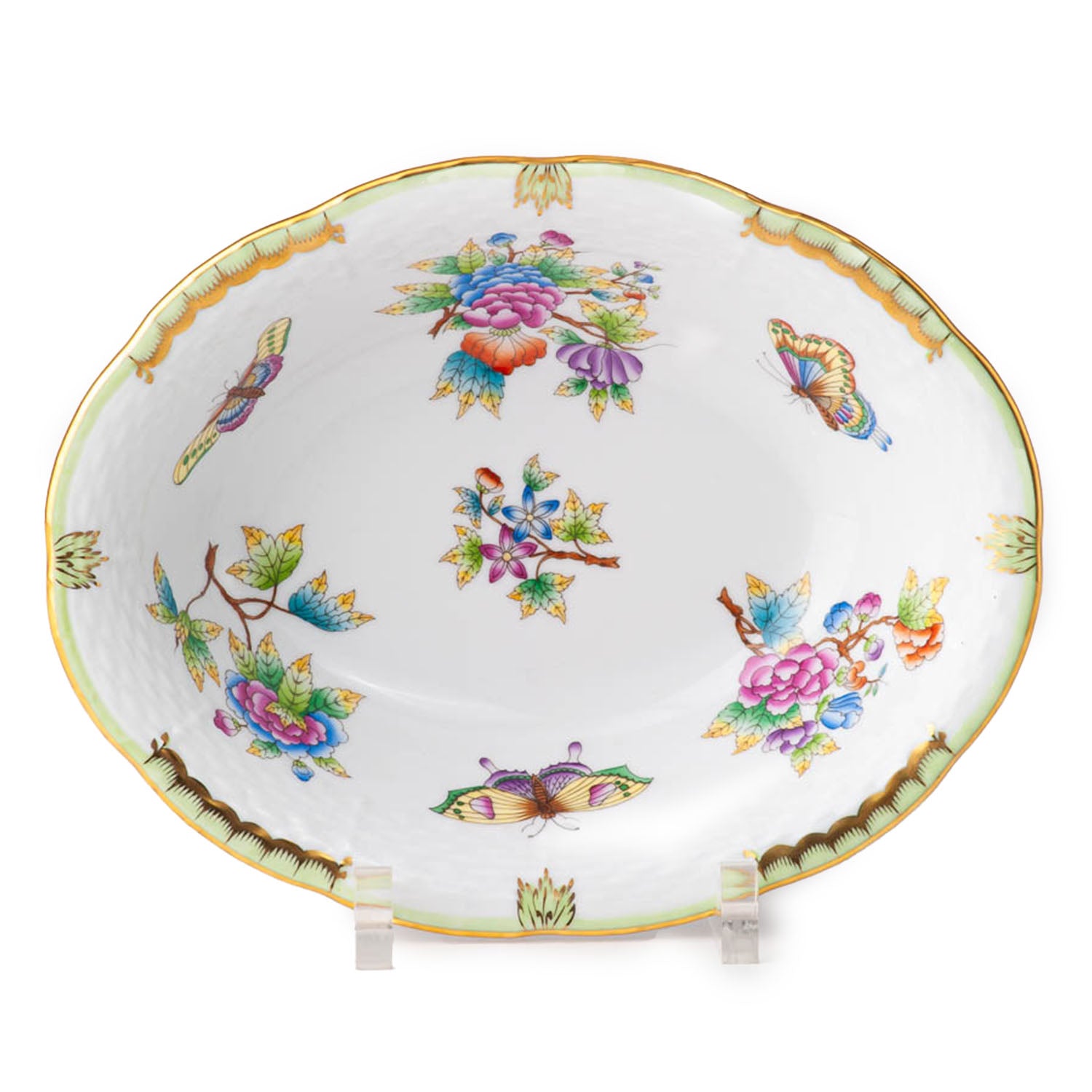
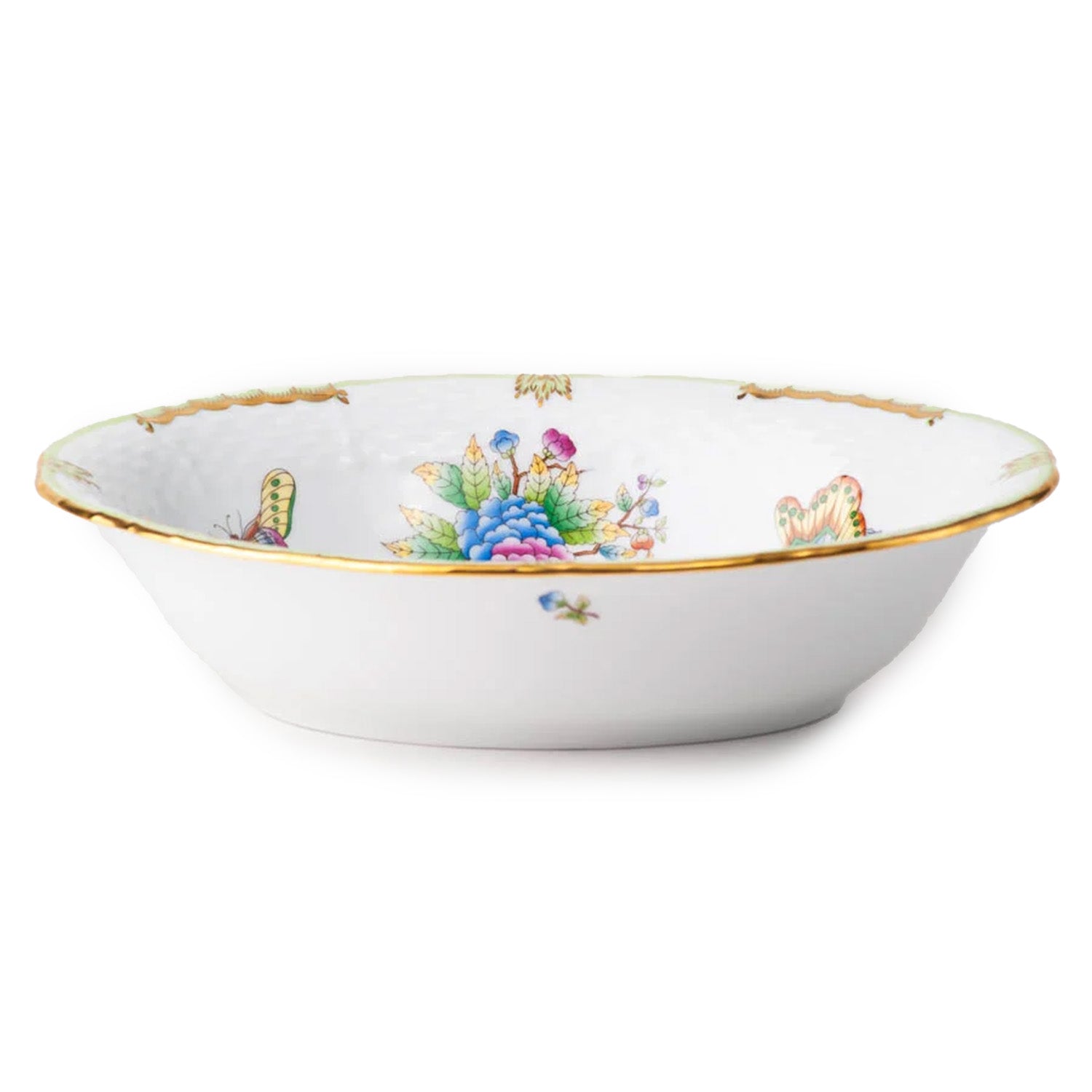
The Queen Victoria pattern is Herend's most historically distinguished design — named for the British monarch whose patronage of Herend at the Great Exhibition of 1851 established the manufactory's international reputation. The pattern is among Herend's most complex and richly decorated: a dense arrangement of botanical motifs applied with the highest level of decorative ambition, in the colourway that Herend considers its most formal. At Thomas Goode India, the Queen Victoria pattern is available across dinner plates (26 cm), a katori bowl (11 cm), an oatmeal/salad bowl (16.5 cm), an oval platter (35 cm), a 15-piece tea set, and an egg-shaped bonbonnière — making it one of the most collected Herend patterns in the collection.

Purple Garland Cornflowers

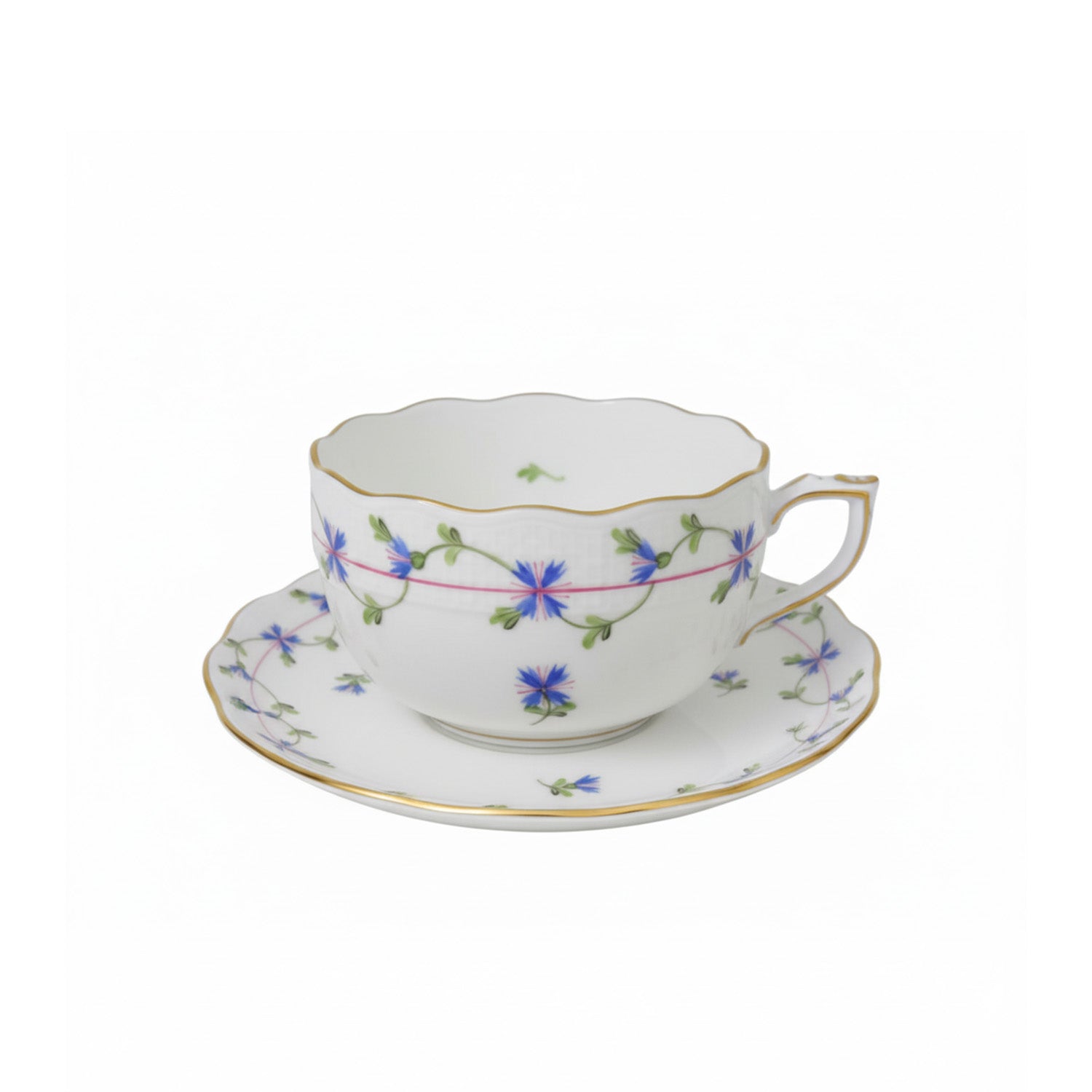
The Purple Garland Cornflowers pattern is one of the botanical series Herend has maintained in continuous production since the 19th century, drawing from the naturalistic European botanical illustration tradition. The cornflower — Centaurea cyanus, a European wildflower with centuries of cultural and symbolic significance — is rendered here in a dense garland composition with a characteristically Herend layered colour depth. At Thomas Goode India, Purple Garland Cornflowers is available across dinner plates (29 cm, 24K gold), a large serving bowl (35 cm, 24K gold), an oval platter (35 cm, 24K gold), katori bowls, and a 15-piece tea set.

Yellow Tulip

The Yellow Tulip pattern places a botanical tulip motif — one of the most historically charged flowers in European decorative arts, associated with the Dutch Golden Age, the Ottoman Empire, and the 17th-century tulip mania that makes it one of the most culturally resonant plants in Western European history — at the centre of the Herend hand-painted tradition. At Thomas Goode India, Yellow Tulip is available across dinner plates (29 cm), a serving bowl, an oval platter, katori bowls, and a 15-piece tea set.

Purple Parrot Tulip

The Purple Parrot Tulip is one of Herend's most visually distinctive patterns — combining the tulip botanical with a figurative parrot motif, a combination with roots in the 17th and 18th-century European decorative arts tradition of pairing exotic birds with botanical subjects. The parrot's vivid plumage and the tulip's structured form produce a composition of more visual complexity than the purely botanical patterns. Available at Thomas Goode India across dinner plates (28 cm), serving bowl, oval platter, katori bowls, and 15-piece tea set.

Gustave Morning Glory

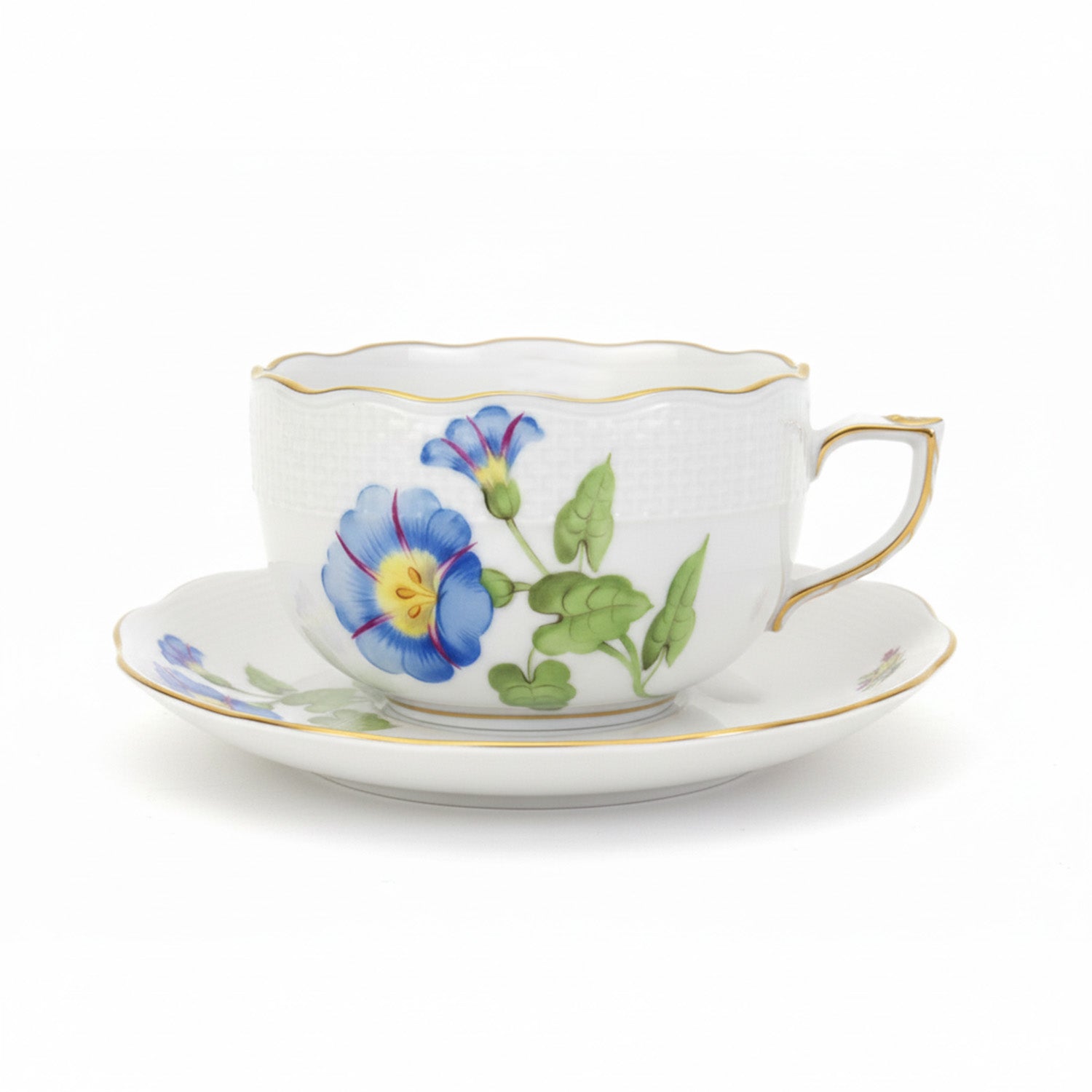
The Gustave Morning Glory pattern takes the morning glory vine — a climbing botanical whose trumpet-shaped flowers open at dawn and close by afternoon — and renders it in Herend's characteristic layered colour technique, with fine gold line work providing the compositional framework across the decorated surface. Available at Thomas Goode India across dinner plates (28 cm), a serving bowl, an oval platter (35 cm), katori bowls, and a 15-piece tea set.

Figurines and Decorative Objects

The Herend figurine range at Thomas Goode India spans hand-painted animal figurines across the Playful Panda, Panda, Baby Bear Sitting, Horse, Little Pig, Rooster, Sitting Frog, Sitting Pug, Duck, Fish (Raspberry and Blue), Koala Cub on Twig, Kitten and Duckling, Two Kittens, Polar Bear, and Lizard on Leaf — each produced entirely by hand at the Herend manufactory with 24K gold accents. The full figurine range is available in the Figurines collection.

The Ganesha Hand Painted Sculpture with 24K Gold Accents is the apex piece in the Herend India-specific offering — a hand-painted hard-paste porcelain Ganesha produced at the Herend manufactory, bringing the full weight of nearly 200 years of European porcelain craft to one of India's most significant devotional forms. Available in the Divinities collection.

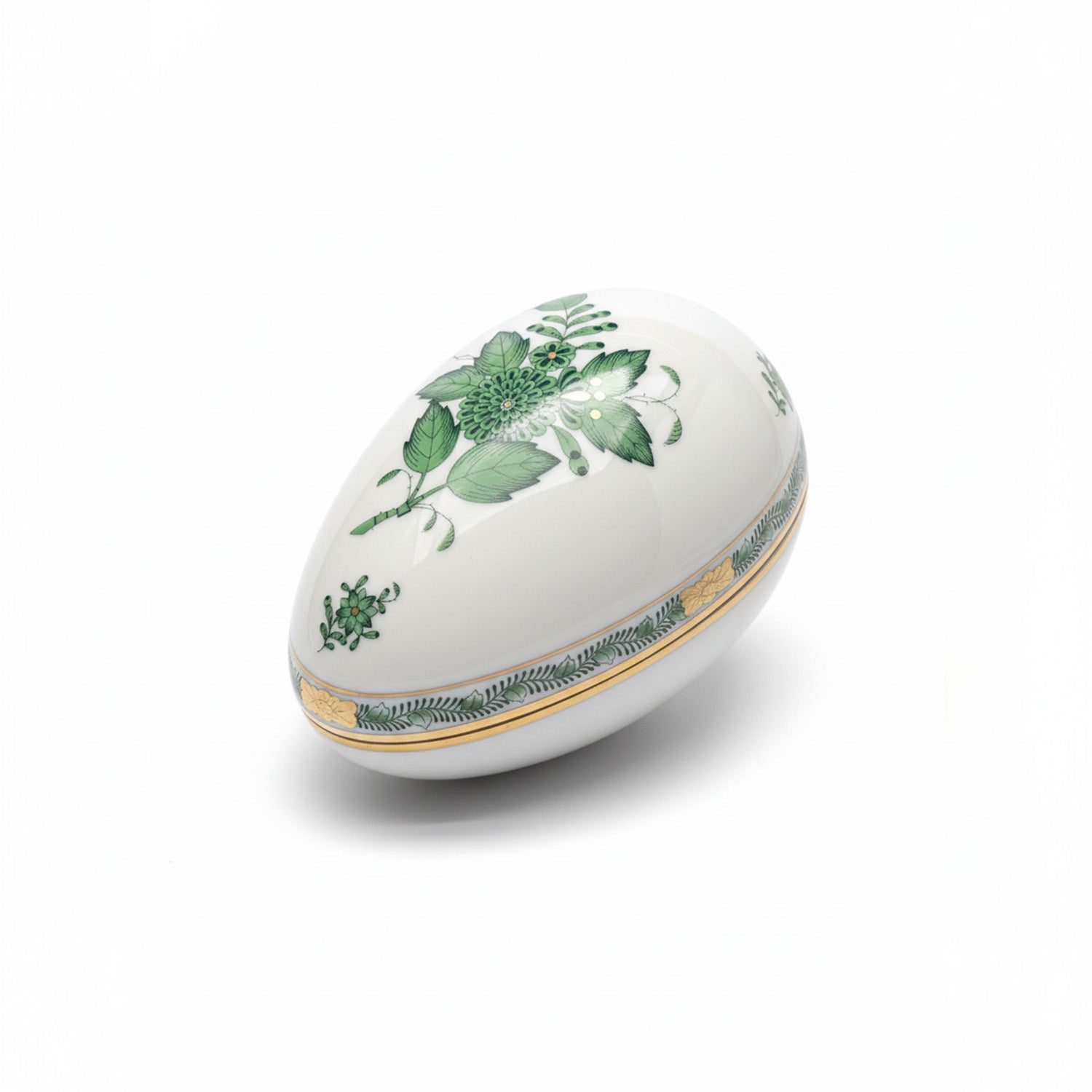
Herend vases — in Queen Victoria, Apponyi Rust, Apponyi Green, and embossed formats — and the Apponyi Green Egg Shaped Bonbonnière complete the decorative object range. All are available in the Vases & Centrepieces and Table Accents collections.

Building a Complete Herend Service at Thomas Goode India

The Herend collection at Thomas Goode India is the only collection from any single maker that spans every format required for a complete formal dinner and tea service: dinner plates, lunch and side plates, dessert plates, katori bowls, serving bowls, oval platters, covered vegetable dish, sauce boat, tea cups and saucers, and 15-piece tea sets — all available within a single pattern family (Apponyi Rust) and across multiple pattern alternatives at the plate and tea set level.

For buyers building a Herend collection in India, the recommended approach is to anchor on a single pattern family and extend across formats incrementally: begin with the 15-piece tea set (the most self-contained Herend acquisition), add the dinner plates and katori bowls, then the serving bowl and oval platter as a complete main course service. The Apponyi collection page provides the most detailed guidance for this assembly approach.

The Cutlery and Table Accents collections complete the formal Herend table setting with Christofle Dédale gold-plated flatware, shagreen napkin rings, and gold-plated table accent pieces whose warmth of tone complements the 24K gold of the Herend pieces.

Gifting Guide

Herend is the most gifting-significant tableware brand at Thomas Goode India for occasions where the gift must carry immediate and lasting authority. A Herend 15-piece tea set — six teacups, six saucers, teapot, sugar, and creamer, all hand-painted in a single pattern — is the most comprehensive luxury tea service gift available in India. A pair of Herend katori bowls in the Queen Victoria or Apponyi pattern is an India-specific gifting format with no equivalent in the Indian luxury retail market: the traditional Indian dining format elevated to the full standard of European luxury hand-painted porcelain.

For corporate gifting at the institutional and diplomatic level, a Herend vase or the Ganesha Sculpture represents the kind of object whose craft standing is legible to any recipient with knowledge of European fine art. For personal collecting and occasion gifting across all scales, the Herend animal figurines — Panda, Fish, Polar Bear, Sitting Pug — are the collection's most individually characterful gifts: small, individually hand-painted, and carrying the full Herend craft identity in the most compact format.

To Shop Herend Hand-Painted Porcelain Online in India, the complete collection is available at thomasgoode.in/collections/herend, with call-to-order and White Glove gifting assistance from the Thomas Goode India team.

Frequently Asked Questions

What is Herend porcelain and where is it made?

Herend is a luxury hand-painted porcelain manufactory established in Herend, Hungary in 1826. Every Herend piece is decorated entirely by hand at the Herend manufactory in Hungary by trained artists using multi-stage traditional painting techniques, with 24K gold or platinum applied and fired separately. No two Herend pieces are identical in their finest decorative details. Thomas Goode India is an authorised Herend retailer, and the collection at The Oberoi Hotel, New Delhi is among the most comprehensively stocked Herend presentations available in India.

What is the Queen Victoria pattern and why is it significant?

The Queen Victoria pattern is Herend's most historically distinguished design, named for Queen Victoria of Britain, who purchased Herend pieces at the Great Exhibition of London in 1851 and became one of the manufactory's earliest and most significant royal patrons. The pattern carries Herend's most complex and richly decorated surface, with a dense botanical composition applied at the manufactory's highest decorative standard. At Thomas Goode India, it is available across dinner plates, katori bowls, oatmeal bowls, oval platter, 15-piece tea set, and egg-shaped bonbonnière.

What Herend 15-piece tea sets are available at Thomas Goode India?

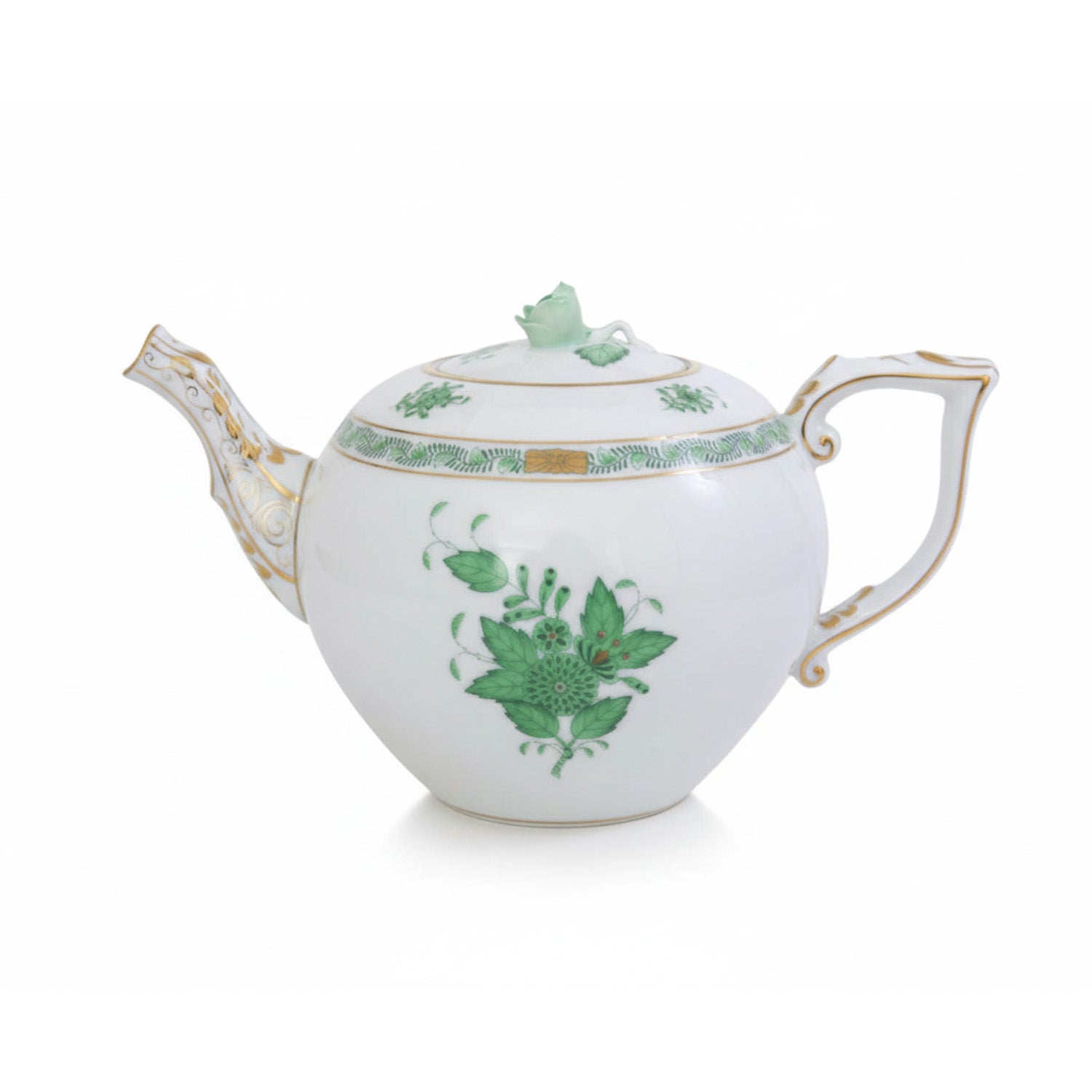
Herend 15-piece tea sets — each comprising six teacups, six saucers, a teapot, a sugar bowl, and a creamer, all hand-painted with 24K gold at the Herend manufactory — are available at Thomas Goode India in the following patterns: Apponyi Rust, Apponyi Blue, Purple Garland Cornflowers, Gustave Morning Glory, Purple Parrot Tulip, Yellow Tulip, and Queen Victoria. The Apponyi Green 15-piece set is currently sold out. The Vienna Rose Grande 16-piece set with tea stove is also available. All are detailed in the Tea Cup & Saucers collection.

What is the Herend Ganesha sculpture?

The Herend Ganesha Hand Painted Sculpture with 24K Gold Accents is a hand-painted hard-paste porcelain Ganesha produced at the Herend manufactory in Hungary. It brings the full standard of nearly 200 years of European luxury porcelain craft — multi-stage hand-painting, 24K gold fired separately — to one of Hinduism's most significant devotional forms. It is among the most significant India-specific pieces available at Thomas Goode India and is available in the Divinities collection.

What are Herend katori bowls and why are they significant in India?

Herend katori bowls at 11 cm are traditional Indian individual serving bowls — used to serve dal, curry, and accompaniments at the place setting — produced in hand-painted Herend hard-paste porcelain with 24K gold rim decoration. Available in Apponyi Blue, Apponyi Rust, Apponyi Green, Yellow Tulip, Purple Garland Cornflowers, Purple Parrot Tulip, Gustave Morning Glory, and Queen Victoria patterns. Thomas Goode India is one of the only places in the world where this traditional Indian dining format is available in genuine Herend hand-painted luxury porcelain.

How should Herend hand-painted porcelain be cared for?

All Herend pieces should be hand-washed in warm water with mild liquid detergent and dried immediately with a soft cloth. Herend must not go in a dishwasher: the alkaline detergent chemistry and high wash temperatures will erode both the painted overglaze decoration and the 24K gold over time. Microwave use is not appropriate for any piece with gold or platinum detailing. Handle figurines by the base rather than by protruding elements such as tails or ears. Place soft cloths between stacked plates to prevent rim contact.
Herend Porcelain | Luxury Hand-Painted Tableware with 24K Gold | Thomas Goode India

About Herend

Herend is the oldest and most distinguished hand-painted porcelain manufactory in Hungary, established in the town of Herend in 1826. For nearly 200 years, every piece that has left the Herend manufactory has been painted entirely by hand by trained artists using traditional multi-stage techniques, with 24K gold or platinum applied and fired in a dedicated separate kiln stage. No two Herend pieces are identical in their finest decorative details. This individual hand is what separates Herend from every other luxury porcelain house in the world: not merely the quality of the material, but the irreducible human presence in each object.
Herend achieved international recognition at the Great Exhibition of London in 1851, where its porcelain was displayed to considerable acclaim and brought to the attention of Queen Victoria — who purchased pieces at the exhibition and became one of the manufactory's most significant early patrons. This royal patronage gave Herend access to the European court market that defined its reputation throughout the 19th century. The Queen Victoria pattern, one of Herend's most celebrated and enduring designs, is named for this historic connection. Herend has since supplied porcelain to royalty, heads of state, and distinguished collectors worldwide, holding royal warrants from multiple European courts.

Thomas Goode India is an authorised Herend retailer in India — one of the few luxury retail channels through which genuine Herend hand-painted porcelain is available on the Indian subcontinent. The collection at The Oberoi Hotel, New Delhi and at thomasgoode.in is among the most comprehensively stocked Herend presentations in India, spanning tableware, serving pieces, decorative vases, figurines, sacred sculptures, and the Apponyi collection across all three colourways.

The Herend Craft Process

What Hand-Painting at Herend Actually Means

Hand-painting at Herend is not a finishing process applied over a machine-formed or transfer-decorated base. It is the primary decorative act, and it involves a sequence of separate stages — each requiring individual skill, each requiring a separate kiln firing — that together produce the depth, richness, and individuality of a genuine Herend piece.

The process begins with the porcelain body: hard-paste porcelain, fired at temperatures above 1400°C at the Herend manufactory in Hungary, producing a dense, non-porous material of exceptional whiteness and hardness. After the first firing produces the bisque form, the glaze is applied and the piece is fired again. Underglaze colour — the deepest layer of painted decoration — is then applied by hand with fine brushes by Herend's trained painters, using pigments that must be interpreted from their unfired appearance to their final fired colour by an artist with years of experience. A further kiln firing fixes the underglaze decoration permanently beneath the glaze surface.

Overglaze colour — the secondary painted layer that gives Herend's surfaces their characteristic depth and complexity — is then applied by hand on top of the glaze, in a separate decorating process, and fired again. Finally, the 24K gold or platinum detailing — applied to rims, handles, motif highlights, and decorative accents — is laid by hand and fired in a dedicated precious metal kiln. The entire sequence, from first painting to final gold firing, involves upwards of ten individual hand operations for a complex piece such as a Herend dinner plate or tea cup.

The result is a painted surface with the depth of accumulated layers with colour beneath the glaze, colour above the glaze, and fired metal at the surface — that produces the optical quality unique to genuine Herend porcelain. Holding a Herend plate to light reveals this depth: the colours shift and the gold catches differently from different angles, because the surface is not flat but layered.

What "No Two Pieces Are Identical" Means in Practice

Every Herend artist develops a personal hand — a characteristic weight of brushstroke, a characteristic approach to the distribution of a motif across a plate's curved surface, a characteristic interpretation of the pigment-to-fired-colour translation. Over years of production within a single pattern, this personal hand accumulates into a subtle but genuine variation between pieces from different artists, and even between pieces from the same artist across different production dates.

This variation is not a quality defect. It is the evidence of human presence — the mark that distinguishes a hand-painted object from a mechanically decorated one. Collectors who build Herend services over time understand and embrace this variation: the slight difference in the placement of a flower head, the slight variation in the weight of a gold line, is not a flaw but an authentication.

Herend Pattern Families at Thomas Goode India

Apponyi

The Apponyi collection is the most complete Herend pattern family at Thomas Goode India, available in three colourways — Apponyi Blue, Apponyi Rust, and Apponyi Green — across every tableware format. The Apponyi pattern, known internally at Herend as the "Chinese Bouquet," is a dense botanical and floral composition with roots in East Asian decorative porcelain, adapted through the Central European court tradition and in continuous production at Herend since the mid-19th century. It is named after the Hungarian Apponyi aristocratic family whose patronage helped establish the design in Herend's repertoire.

Apponyi Rust provides the most complete service depth: dinner plates (28 cm), lunch plates (25.5 cm), side plates (21 cm), dessert and bread plates, dessert bowls, oatmeal bowls, a 35 cm oval platter, a 25 cm serving bowl, katori bowls, a vegetable covered dish, a sauce boat, tea cup and saucer, and a 15-piece complete tea set. The full Apponyi collection is explored at thomasgoode.in/collections/apponyi.

Queen Victoria

The Queen Victoria pattern is Herend's most historically distinguished design — named for the British monarch whose patronage of Herend at the Great Exhibition of 1851 established the manufactory's international reputation. The pattern is among Herend's most complex and richly decorated: a dense arrangement of botanical motifs applied with the highest level of decorative ambition, in the colourway that Herend considers its most formal. At Thomas Goode India, the Queen Victoria pattern is available across dinner plates (26 cm), a katori bowl (11 cm), an oatmeal/salad bowl (16.5 cm), an oval platter (35 cm), a 15-piece tea set, and an egg-shaped bonbonnière — making it one of the most collected Herend patterns in the collection.

Purple Garland Cornflowers

The Purple Garland Cornflowers pattern is one of the botanical series Herend has maintained in continuous production since the 19th century, drawing from the naturalistic European botanical illustration tradition. The cornflower — Centaurea cyanus, a European wildflower with centuries of cultural and symbolic significance — is rendered here in a dense garland composition with a characteristically Herend layered colour depth. At Thomas Goode India, Purple Garland Cornflowers is available across dinner plates (29 cm, 24K gold), a large serving bowl (35 cm, 24K gold), an oval platter (35 cm, 24K gold), katori bowls, and a 15-piece tea set.

Yellow Tulip

The Yellow Tulip pattern places a botanical tulip motif — one of the most historically charged flowers in European decorative arts, associated with the Dutch Golden Age, the Ottoman Empire, and the 17th-century tulip mania that makes it one of the most culturally resonant plants in Western European history — at the centre of the Herend hand-painted tradition. At Thomas Goode India, Yellow Tulip is available across dinner plates (29 cm), a serving bowl, an oval platter, katori bowls, and a 15-piece tea set.

Purple Parrot Tulip

The Purple Parrot Tulip is one of Herend's most visually distinctive patterns — combining the tulip botanical with a figurative parrot motif, a combination with roots in the 17th and 18th-century European decorative arts tradition of pairing exotic birds with botanical subjects. The parrot's vivid plumage and the tulip's structured form produce a composition of more visual complexity than the purely botanical patterns. Available at Thomas Goode India across dinner plates (28 cm), serving bowl, oval platter, katori bowls, and 15-piece tea set.

Gustave Morning Glory

The Gustave Morning Glory pattern takes the morning glory vine — a climbing botanical whose trumpet-shaped flowers open at dawn and close by afternoon — and renders it in Herend's characteristic layered colour technique, with fine gold line work providing the compositional framework across the decorated surface. Available at Thomas Goode India across dinner plates (28 cm), a serving bowl, an oval platter (35 cm), katori bowls, and a 15-piece tea set.

Figurines and Decorative Objects

The Herend figurine range at Thomas Goode India spans hand-painted animal figurines across the Playful Panda, Panda, Baby Bear Sitting, Horse, Little Pig, Rooster, Sitting Frog, Sitting Pug, Duck, Fish (Raspberry and Blue), Koala Cub on Twig, Kitten and Duckling, Two Kittens, Polar Bear, and Lizard on Leaf — each produced entirely by hand at the Herend manufactory with 24K gold accents. The full figurine range is available in the Figurines collection.

The Ganesha Hand Painted Sculpture with 24K Gold Accents is the apex piece in the Herend India-specific offering — a hand-painted hard-paste porcelain Ganesha produced at the Herend manufactory, bringing the full weight of nearly 200 years of European porcelain craft to one of India's most significant devotional forms. Available in the Divinities collection.

Herend vases — in Queen Victoria, Apponyi Rust, Apponyi Green, and embossed formats — and the Apponyi Green Egg Shaped Bonbonnière complete the decorative object range. All are available in the Vases & Centrepieces and Table Accents collections.

Building a Complete Herend Service at Thomas Goode India

The Herend collection at Thomas Goode India is the only collection from any single maker that spans every format required for a complete formal dinner and tea service: dinner plates, lunch and side plates, dessert plates, katori bowls, serving bowls, oval platters, covered vegetable dish, sauce boat, tea cups and saucers, and 15-piece tea sets — all available within a single pattern family (Apponyi Rust) and across multiple pattern alternatives at the plate and tea set level.

For buyers building a Herend collection in India, the recommended approach is to anchor on a single pattern family and extend across formats incrementally: begin with the 15-piece tea set (the most self-contained Herend acquisition), add the dinner plates and katori bowls, then the serving bowl and oval platter as a complete main course service. The Apponyi collection page provides the most detailed guidance for this assembly approach.

The Cutlery and Table Accents collections complete the formal Herend table setting with Christofle Dédale gold-plated flatware, shagreen napkin rings, and gold-plated table accent pieces whose warmth of tone complements the 24K gold of the Herend pieces.

Gifting Guide

Herend is the most gifting-significant tableware brand at Thomas Goode India for occasions where the gift must carry immediate and lasting authority. A Herend 15-piece tea set — six teacups, six saucers, teapot, sugar, and creamer, all hand-painted in a single pattern — is the most comprehensive luxury tea service gift available in India. A pair of Herend katori bowls in the Queen Victoria or Apponyi pattern is an India-specific gifting format with no equivalent in the Indian luxury retail market: the traditional Indian dining format elevated to the full standard of European luxury hand-painted porcelain.

For corporate gifting at the institutional and diplomatic level, a Herend vase or the Ganesha Sculpture represents the kind of object whose craft standing is legible to any recipient with knowledge of European fine art. For personal collecting and occasion gifting across all scales, the Herend animal figurines — Panda, Fish, Polar Bear, Sitting Pug — are the collection's most individually characterful gifts: small, individually hand-painted, and carrying the full Herend craft identity in the most compact format.

To Shop Herend Hand-Painted Porcelain Online in India, the complete collection is available at thomasgoode.in/collections/herend, with call-to-order and White Glove gifting assistance from the Thomas Goode India team.

Frequently Asked Questions

What is Herend porcelain and where is it made?

Herend is a luxury hand-painted porcelain manufactory established in Herend, Hungary in 1826. Every Herend piece is decorated entirely by hand at the Herend manufactory in Hungary by trained artists using multi-stage traditional painting techniques, with 24K gold or platinum applied and fired separately. No two Herend pieces are identical in their finest decorative details. Thomas Goode India is an authorised Herend retailer, and the collection at The Oberoi Hotel, New Delhi is among the most comprehensively stocked Herend presentations available in India.

What is the Queen Victoria pattern and why is it significant?

The Queen Victoria pattern is Herend's most historically distinguished design, named for Queen Victoria of Britain, who purchased Herend pieces at the Great Exhibition of London in 1851 and became one of the manufactory's earliest and most significant royal patrons. The pattern carries Herend's most complex and richly decorated surface, with a dense botanical composition applied at the manufactory's highest decorative standard. At Thomas Goode India, it is available across dinner plates, katori bowls, oatmeal bowls, oval platter, 15-piece tea set, and egg-shaped bonbonnière.

What Herend 15-piece tea sets are available at Thomas Goode India?

Herend 15-piece tea sets — each comprising six teacups, six saucers, a teapot, a sugar bowl, and a creamer, all hand-painted with 24K gold at the Herend manufactory — are available at Thomas Goode India in the following patterns: Apponyi Rust, Apponyi Blue, Purple Garland Cornflowers, Gustave Morning Glory, Purple Parrot Tulip, Yellow Tulip, and Queen Victoria. The Apponyi Green 15-piece set is currently sold out. The Vienna Rose Grande 16-piece set with tea stove is also available. All are detailed in the Tea Cup & Saucers collection.

What is the Herend Ganesha sculpture?

The Herend Ganesha Hand Painted Sculpture with 24K Gold Accents is a hand-painted hard-paste porcelain Ganesha produced at the Herend manufactory in Hungary. It brings the full standard of nearly 200 years of European luxury porcelain craft — multi-stage hand-painting, 24K gold fired separately — to one of Hinduism's most significant devotional forms. It is among the most significant India-specific pieces available at Thomas Goode India and is available in the Divinities collection.

What are Herend katori bowls and why are they significant in India?

Herend katori bowls at 11 cm are traditional Indian individual serving bowls — used to serve dal, curry, and accompaniments at the place setting — produced in hand-painted Herend hard-paste porcelain with 24K gold rim decoration. Available in Apponyi Blue, Apponyi Rust, Apponyi Green, Yellow Tulip, Purple Garland Cornflowers, Purple Parrot Tulip, Gustave Morning Glory, and Queen Victoria patterns. Thomas Goode India is one of the only places in the world where this traditional Indian dining format is available in genuine Herend hand-painted luxury porcelain.

How should Herend hand-painted porcelain be cared for?

All Herend pieces should be hand-washed in warm water with mild liquid detergent and dried immediately with a soft cloth. Herend must not go in a dishwasher: the alkaline detergent chemistry and high wash temperatures will erode both the painted overglaze decoration and the 24K gold over time. Microwave use is not appropriate for any piece with gold or platinum detailing. Handle figurines by the base rather than by protruding elements such as tails or ears. Place soft cloths between stacked plates to prevent rim contact.